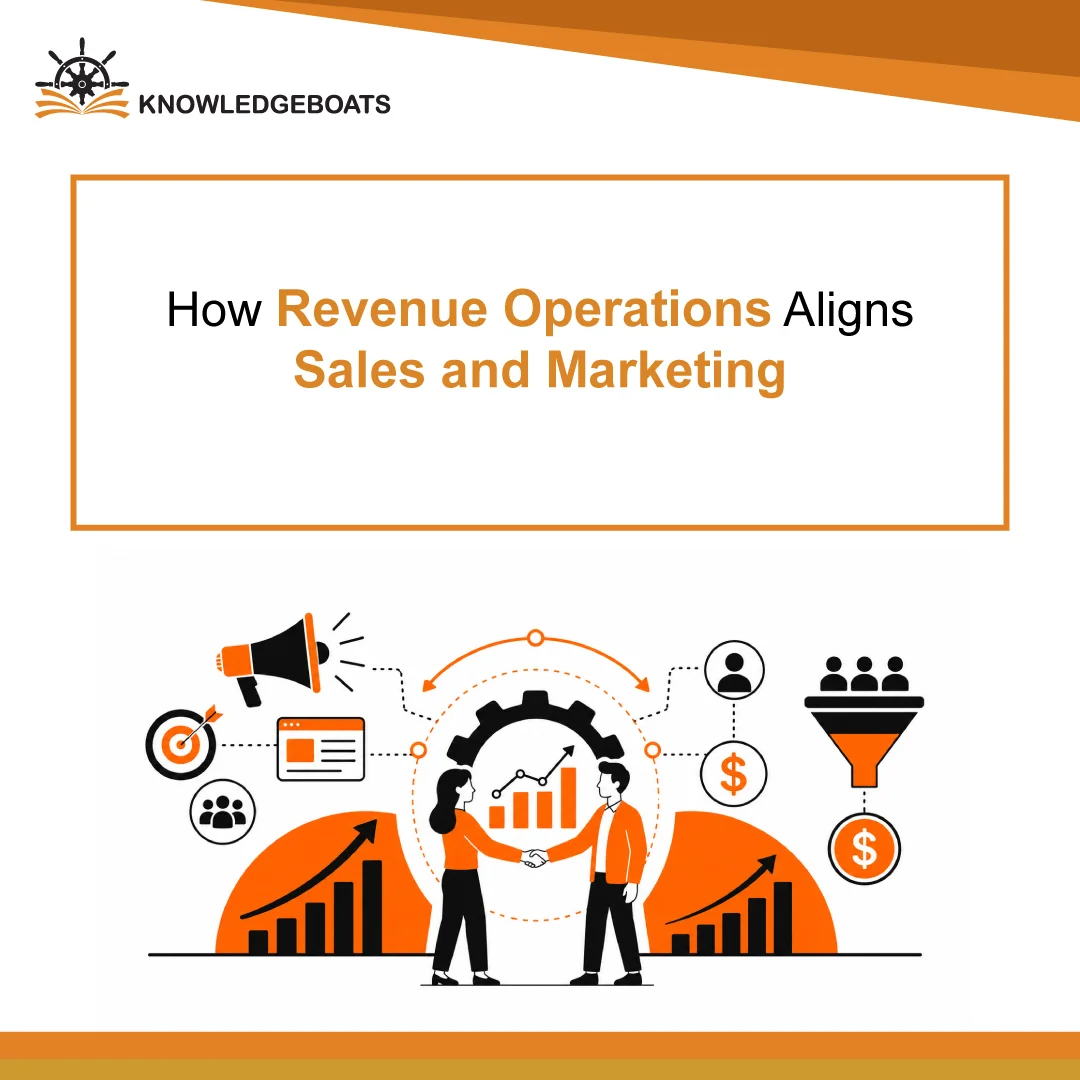
RevOps provides shared revenue goals, data, accountability across the buyer journey, and processes to sales and marketing functions to align them. This operating model reduces pipeline gaps caused by functional misalignment through shared definitions, accountability, and data.
Yet, many B2B enterprises treat the misalignment problem as a communication issue. Joint planning sessions rarely bridge this divergence, but an aligned revenue operations framework for enterprises can improve revenue execution by connecting planning, pipeline data, and accountability.
Widelly’s 2026 research finds that B2B enterprises with aligned RevOps teams experience 19% faster revenue growth and 15% higher profitability. Rather than assigning a new title or placing three adjacent roles, RevOps is about running a single function.
Enterprises that establish RevOps principles early can build stronger pipeline continuity, while treating RevOps as an organizational trend can leave handoff gaps unresolved.
How Revenue Operations Aligns Sales and Marketing
B2B revenue operations create a single source of truth for a shared definition of a qualified opportunity, unified accountability, and pipeline data that ties marketing and sales functions to the same revenue outcomes.
Marketing and sales often refer to different data while communicating. While marketing refers to leads from MAP, sales emphasize prospects from CRM. Rather than being a point of debate, lead qualification becomes a shared operating decision for both functions, as the operations team connects them by offering the same account view.
Sopro’s 2026 research finds that 41% of B2B enterprises observe improved lead quality by aligning sales and marketing with RevOps. The following four alignment mechanisms can help companies achieve this:
| Alignment Mechanism | What It Changes | What It Produces |
|---|---|---|
| Shared Definitions of Lifecycle, Qualifications, and ICP | Teams start using the same qualification logic. | Fewer poor-fit handoffs. |
| Common Funnel and Pipeline Ownership | Marketing and sales have defined ownership at each stage, while RevOps maintains continuity across handoffs. | Better pipeline continuity. |
| Connected Marketing Data and CRM | CRM and MAP data are connected through shared field definitions, ownership rules, and synchronization. | Fewer data conflicts and a more consistent customer view. |
| Feedback Loops and Recurring Revenue Reviews | Sales and marketing review pipeline performance, conversion, and handoff outcomes together. | Faster course correction. |
When both teams can see the same buyer signal, and they are accountable for what happens at handoffs, alignment becomes commercially more valuable.
Standardizing the pipeline definition, creating a revenue intelligence layer, and building a go-to-market strategy governance framework are three tasks a RevOps model performs to align sales and marketing.
How to Build a RevOps Strategy That Works
Building and implementing a revenue operations model needs sequential structural decisions, including developing unified data infrastructure, sharing process definitions, and automation. Many B2B enterprises reverse the sequence only to question outcomes that no teams trust.
Organizations often start wrong by selecting the technology, including a CRM platform, MAP, or revenue intelligence platform, while technology can only enforce agreed data definitions and processes. This can create ambiguity if those definitions do not exist.
The following steps can help a B2B team employ a RevOps model:
- Lifecycle Mapping: The first step is to map the revenue lifecycle from first engagement through expansion and closed revenue.
- Determine Process Definitions: Define stage criteria, ownership, service-level expectations, and data requirements at every transition.
- Establish a Shared Data Model: Before resolving workflow queries, define the business questions the CRM and revenue data must answer.
- Standardize Revenue Operations Process: Clearly define routing logic, entry-exit criteria, pipeline ownership, escalation paths, and handoff rules.
- Configure RevOps Technology Stack: Based on decisions made in previous steps, select and configure the technology stack that can enforce the agreed processes, data definitions, and routing logic.
A RevOps model only scales disagreements when it is built on undefined terms. Reps and marketers both require common revenue operations processes to perform, because marketing and sales enablement are outcomes of the same shared pipeline intelligence.
What Connects Revenue Operations and Sales Performance
Intuition-based pipeline management is replaced by a data-defined system with documented stages, next steps, and risk signals, leveraging revenue operations to convert forecast variance into diagnostic outcomes and improve sales performance.
RevOps often increases efficiency, which is a real gain, while improved forecast accuracy is a strategic gain. What leadership can commit to may change due to a revenue forecasting framework built on pipeline data with consistency and hygiene. However, the pipeline built on inconsistent data often reflects optimism rather than evidence.
According to Ven Studio’s 2026 analysis, Salesforce found that B2B teams with 90%+ forecast accuracy can grow 30% faster than enterprises with less than 80% accuracy. Identifying why and where deals stall, and what actions change the outcome, is what sales pipeline optimization means.
As many B2B enterprises enter CRM data inconsistently, they might not perform that analysis as efficiently as those with consistent CRM data. When the data is clean, AI-driven revenue analytics platforms like Salesforce Einstein, Gong, and Clari can perform more effectively when they have clean, connected data.
How RevOps Improves Sales and Marketing Alignment
RevOps provides sales and marketing teams with access to the same customer journey analytics and holds both accountable to a common pipeline number, driving alignment.
Sales and marketing alignment often includes unified reporting, joint pipeline reviews, and shared OKRs. These practices are necessary, but they rarely resolve underlying data and process gaps on their own.
When either team optimizes for the metric the other cannot see, the alignment breaks, as those metrics are not connected to any stage in the shared pipeline model. Rather than measuring the volume marketing team produces, measuring the pipeline it hands to sales determines real alignment.
A revOps model integrating with revenue operations software like Salesforce or HubSpot can produce durable alignment when configured to produce a shared view. AI-powered scoring, intent signals, and predictive revenue operations change this alignment even more.
Rather than sales and marketing working on identifying leads and questioning the qualification, respectively, revenue operations management ensures that they operate on in-market account signals.
Final Thoughts: What Should Be the Revenue Operations Strategy for B2B Companies
More than an efficiency initiative, a RevOps strategy is a revenue architecture decision that makes sales and marketing functions operate as a unified system rather than two separate entities meeting at a handoff point.
Beyond a sophisticated technology stack, shared pipeline definitions, common data for sales and marketing to act on, and unified accountability are important prerequisites that help the strategy extract compounding revenue growth. Although this architecture needs more time to be built, it lasts longer than any platform cycle.
Book a free 30-minute audit with Knowledgeboats to identify where your current sales and marketing handoff loses the pipeline that it should have closed.
FAQs
1. How does RevOps align sales and marketing?
RevOps provides shared pipeline definitions, data, lifecycle stages, accountability, and revenue targets across the buyer journey to align sales and marketing.
2. How does RevOps improve revenue growth?
RevOps reduces pipeline friction, identifies revenue leakage, improves forecasts, and helps enterprises prioritize opportunities using consistent intelligence to improve revenue growth.
3. Which KPIs should RevOps teams track?
Stage conversion, velocity, pipeline creation and expansion, win rate, sales-cycle length, retention, revenue attainment, and forecast accuracy are some important KPIs that RevOps teams must track.
4. How does RevOps improve customer experience?
By connecting customer data across teams, RevOps creates consistent handoffs with better context and a coherent experience during the revenue lifecycle to improve the customer experience.
5. How does AI support Revenue Operations?
AI can enhance forecasting, workflow automation, lead scoring, revenue analytics, and pattern detection that can surface opportunities and risks across connected customer data.