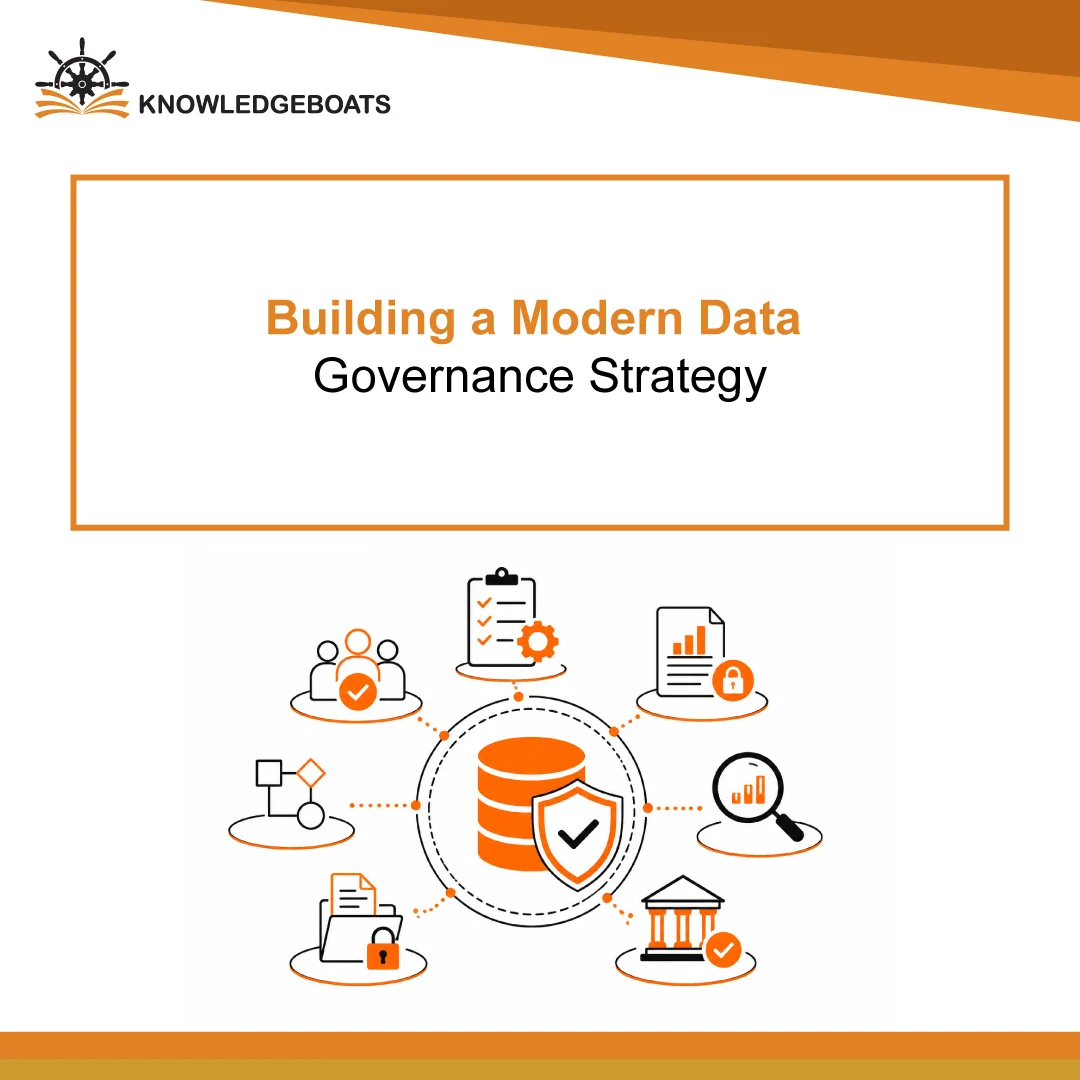
An ideal modern data governance strategy provides B2B enterprises with an architecture that treats data as a managed asset, enabling organizations to make decisions based on trustworthy data.
Despite having data, many B2B teams lack governance, and the difference between the two is organizational rather than technical. An enterprise data governance framework that lacks enforcement, a feedback mechanism, and ownership is only a documentation project dressed as a governance program.
Gartner finds that 61% of B2B organizations are forced to rethink their D&A model. A poor policy causes governance failure, but more than that, the governance itself slows down good data decisions, as it fails to regulate bad ones.
The data governance operating model sets the ceiling for analytics quality, AI adoption, and regulatory compliance, and transforms these operational capabilities into business velocity.
Why Data Governance Is Important for Enterprises
Regulatory compliance is a common argument for data governance. Though CCPA and GDPR matter, their framing is strategically insufficient, transforming governance into legal cost rather than a capability.
B2B teams investing in data governance principles merely to satisfy regulators often develop the least viable compliance infrastructure, yet wonder why their analytics produce wrong output and why their AI frameworks fail.
Poor data quality not only produces incorrect outcomes but also provides the right-looking wrong answers, and this is structurally more dangerous than not having answers at all.
IBM’s 2025 research finds that 43% of COOs identify data quality issues as their most significant data priority, while more than a quarter of organizations estimate annual losses of over USD 5 million due to poor data quality.
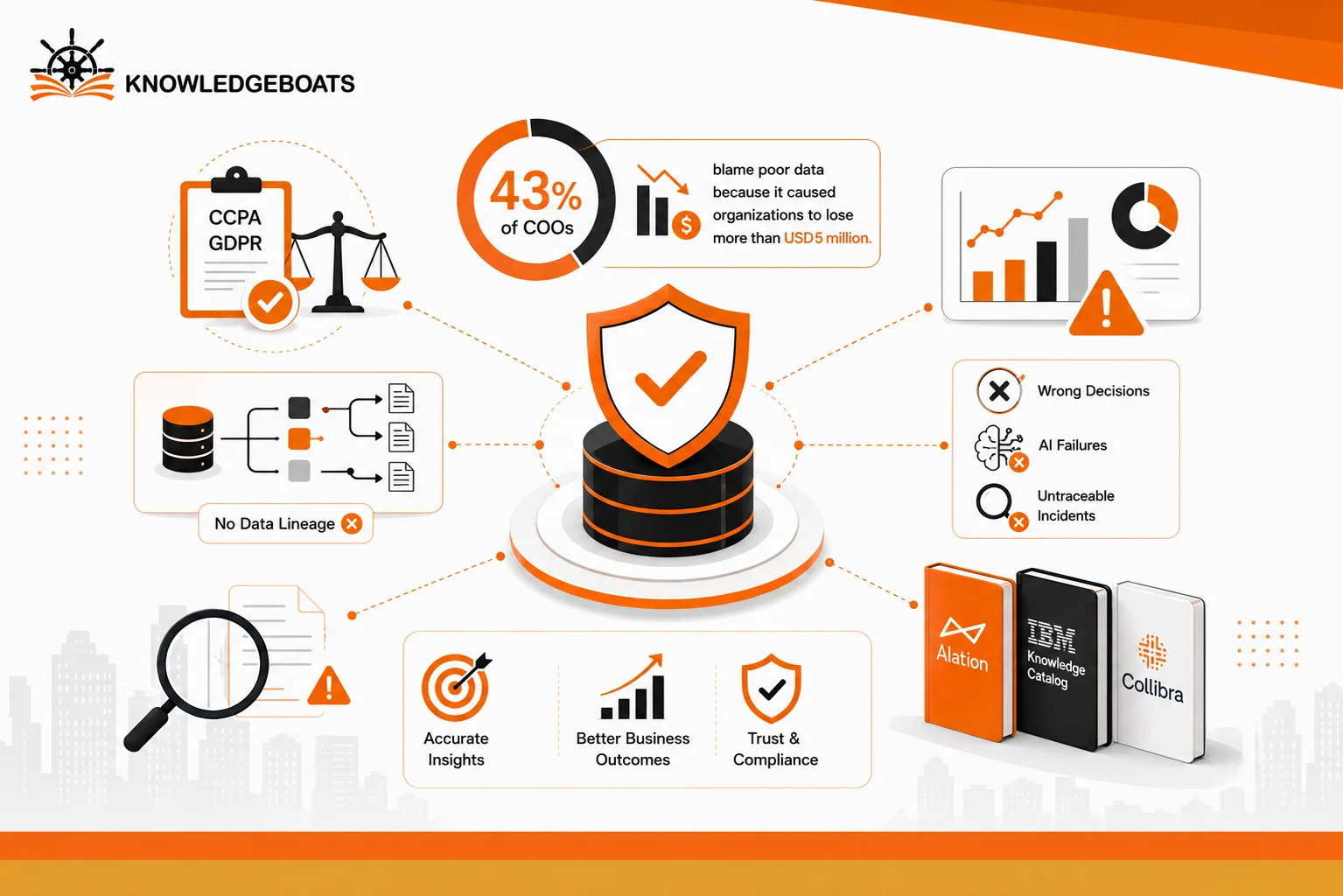
Many B2B enterprises lack data lineage, and still, they need it urgently. Its absence makes the AI model go undebugged, fail regulatory audits, and lead to untraceable data quality incidents.
Instead of acting as an optional reporting feature, a governance architecture producing durable data governance for business growth often yields better outcomes. Although tools, including Alation, IBM Knowledge Catalog, and Collibra, offer lineage tracking, the data governance architecture determines what they enforce.
How to Build a Data Governance Strategy
Data governance implementation guides often include instructions for selecting a data catalog, deploying a governance platform, and configuring metadata management. B2B enterprises that develop their data compliance strategy around platform purchase often fail.
But the ideal enterprise data governance strategy guide should start by asking about data ownership, its standards and implementation, and the consequences of poor data quality. Here are the five decisions that can help B2B teams develop such a guide:
- Define the governance model. Based on data distribution and organizational structure, select either a centralized, federated, or hybrid model.
- Identify key data domains. Choose datasets that govern regulatory reporting, outcomes of AI models, and business decisions.
- Assign data ownership. Instead of treating IT custodianship as ownership, assign a dedicated business owner to each domain.
- Establish data governance policies. Precisely define retention rules, access controls, and quality thresholds.
- Develop the monitoring and enforcement layer. Create an audit and tooling cadence, along with an escalation protocol.
What Are the Data Governance Challenges and Solutions
| Core Challenge | Root Cause | Solution |
|---|---|---|
| Data ownership without authority | Named owners fail to employ quality thresholds. | Business owners must have defined accountability and decision rights. |
| Scalability without architecture | Governance teams expand linearly with data estate. | Use tools like Google Dataplex or AWS Glue to automate governance at the pipeline layer. |
| Governance without enforcement | Despite existing policies, their violations have no consequences. | Automate enforcement and integrate controls into workflows wherever possible. |
| Fragmented cloud environments | Data travels across consumption contexts, regions, and platforms. | Employ centralized standards with automated and distributed enforcement. |
Challenges in the data governance process are mainly organizational, and treating them as technical issues often makes the root cause go unnoticed. Gitnux’s 2026 research finds that 81% of companies face data quality-related problems due to poor governance.
Most governance guides highlight common data governance mistakes as causes, but in reality, they are merely symptoms, and every case has the same cause. Governance is incorrectly designed as an oversight function instead of an operational one.
Many conventional governance architectures cannot handle the complexity that cloud data governance strategy adds.
How Data Governance for Generative AI Works in 2026
Beyond merely consuming, generative AI produces data, and its output is the input for subsequent models, business processes, or decisions. The feedback loop implies that, more than governing what the AI model is trained on, it should control what the AI data governance model produces, how it is stored, attributed, and validated.
The data governance strategy for digital transformation in most cases only addresses the training-layer data to govern input, leaving the output completely unmanaged. Although traditional governance frameworks were adequate for analytics and structured BI, they are inadequate for generative AI.
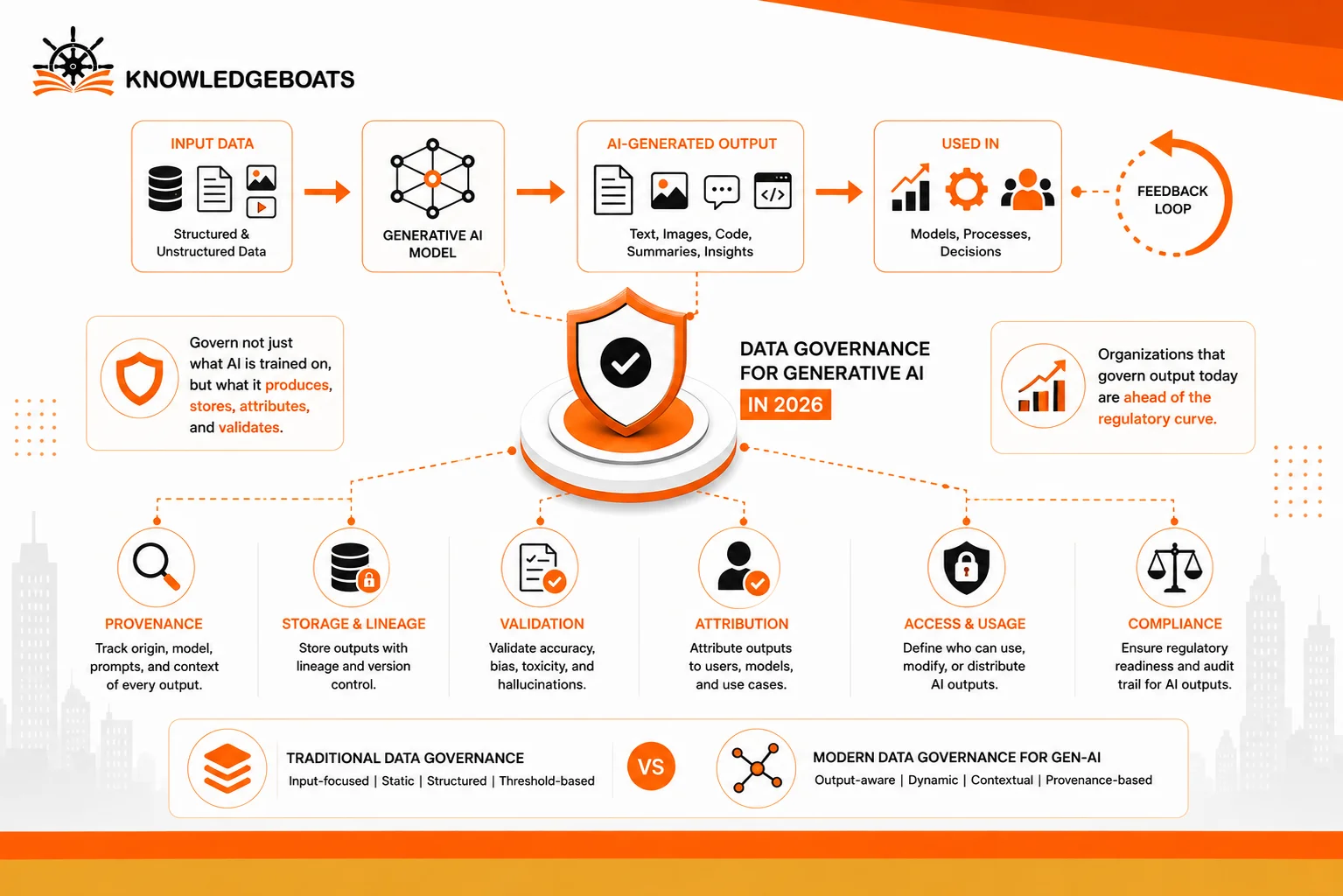
While structured governance treats data assets as bounded, static, and defined, Gen-AI outcomes are probabilistic, contextual, and dynamic. The modern data governance framework for enterprises must shift from threshold-based quality management to provenance-based accountability.
AI-driven governance strategy frameworks must treat model outputs as governed data assets, and B2B organizations building these frameworks will be better positioned for emerging AI governance requirements.
Summary: Why Building a Modern Data Governance Strategy Is Important, and How to Implement Enterprise Data Governance
Beyond just a technology project, a data governance roadmap for organizations is an operating capability that determines the quality of data-based decisions. In the AI-driven, analytics-dependent, and automated decisioning environment, the infrastructure often determines enterprise quality.
An accurately developed data governance program is a compounding asset, and every streamlined activity accelerates the subsequent AI deployment, increases its reliability, and reduces disruptions in regulatory audits.
Along with fulfilling regulators’ expectations, B2B teams building the data governance maturity model can outperform their competitors because their data will be more trusted and credible.
Knowledgeboats can help you identify gaps in your current governance architecture and improve data trustworthiness by creating a scalable data governance strategy.
FAQs
1. Why is data governance important?
As data governance ensures the important business data remains trusted, accessible, accurate, properly controlled, and traceable, it improves business decisions by reducing AI-related and operational risks and improving compliance.
2. How do you build a data governance strategy?
Define ownership in the first place. Identifying critical data domains follows, while establishing quality and access standards is the third step. Implement lineage, then create continuous monitoring and enforcement processes.
3. What are the components of a data governance framework?
Ownership, clearly defined governance responsibilities, data quality management, metadata, data cataloging, compliance, lineage, lifecycle management, policies, access controls, and monitoring are some important components of a data governance model.
4. What tools are used for data governance?
Google Dataplex, IBM Knowledge Catalog, AWS Glue, Microsoft Purview, Collibra, Alation, and Databricks Unity Catalog are some data governance tools used for cataloging, lineage, quality, and policy enforcement.
5. What are the biggest data governance challenges?
Weak enforcement, unclear ownership, unscalable governance processes, fragmented data environments, limited executive accountability, and inconsistent quality standards are some key challenges in data governance.