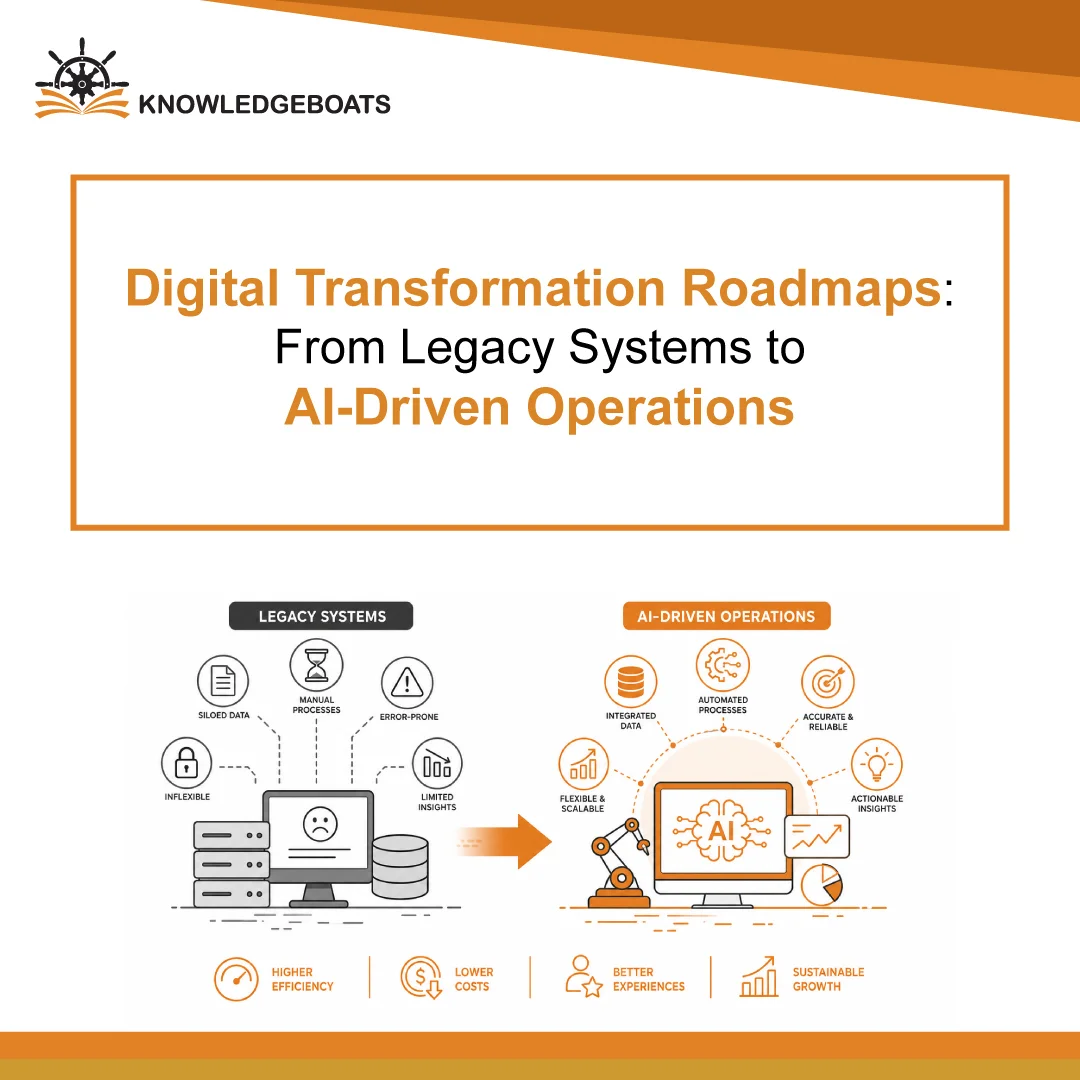
A successful digital transformation roadmap often redesigns the way an enterprise works instead of replacing its legacy technology. The roadmap helps the organization shift from legacy operations to AI-powered operations through sequential redesign. It decides the systems to modernize and their order before selecting a vendor.
Most B2B teams observe their legacy system modernization failing because they adopt a backward approach toward digital transformation. They choose platforms first, followed by building a business case, and then finding constraints. McKinsey Transformation’s research finds that 70% of digital transformations fail due to these reasons.
Legacy systems that restrict organizational intelligence eventually become business constraints. Digital transformation often dresses as a technological initiative, but in reality, it is a transformation of operating models.
Why Is Legacy System Modernization Important?
B2B enterprises often justify the legacy system modernization roadmap with the help of conventional arguments like reduced technical debt, lower maintenance, and faster processes. All these arguments are strategically insufficient, although they are accurate.
However, the real business case has transformed to competitive capability, and it is no longer a cost reduction exercise. Beyond slowing down operations, legacy systems hold B2B enterprises back in markets where intelligence, adaptability, and speed are key parameters to compete.
Most legacy systems were never designed for personalized CX, predictive forecasting, AI-driven decision-making, and real-time business intelligence, which modern companies often need. RecordPoint finds that legacy systems consume up to 80% of annual IT budgets globally.
Enterprises deprioritizing digital transformation from legacy systems often suffer a compounding capability gap. Competitors deploying new AI capabilities widen the gap, increasing the technical debt, which makes modernization even harder.
Legacy modernization is a strategic timing decision, and as long as enterprises remain unmodernized, they cannot deploy AI capabilities that reshape competitive dynamics.
How to Build a Digital Transformation Roadmap from Legacy Systems?
Most digital modernization strategy frameworks originate from an inventory of current systems and then build toward new architecture, producing technically sound, yet organizationally undeliverable roadmaps.
These frameworks often ignore business value delivery and sequence migration decisions based on system dependencies. An ideal roadmap for digital operating model transformation asks the following three questions before touching a single system:
- Which are the non-negotiable business outcomes and which current systems are preventing those outcomes from being achieved?
- Which migration decisions will create maximum prospects for AI deployment, process automation, and data integration?
- How many changes can the system absorb without disrupting operations, and which sequences can be used for this?
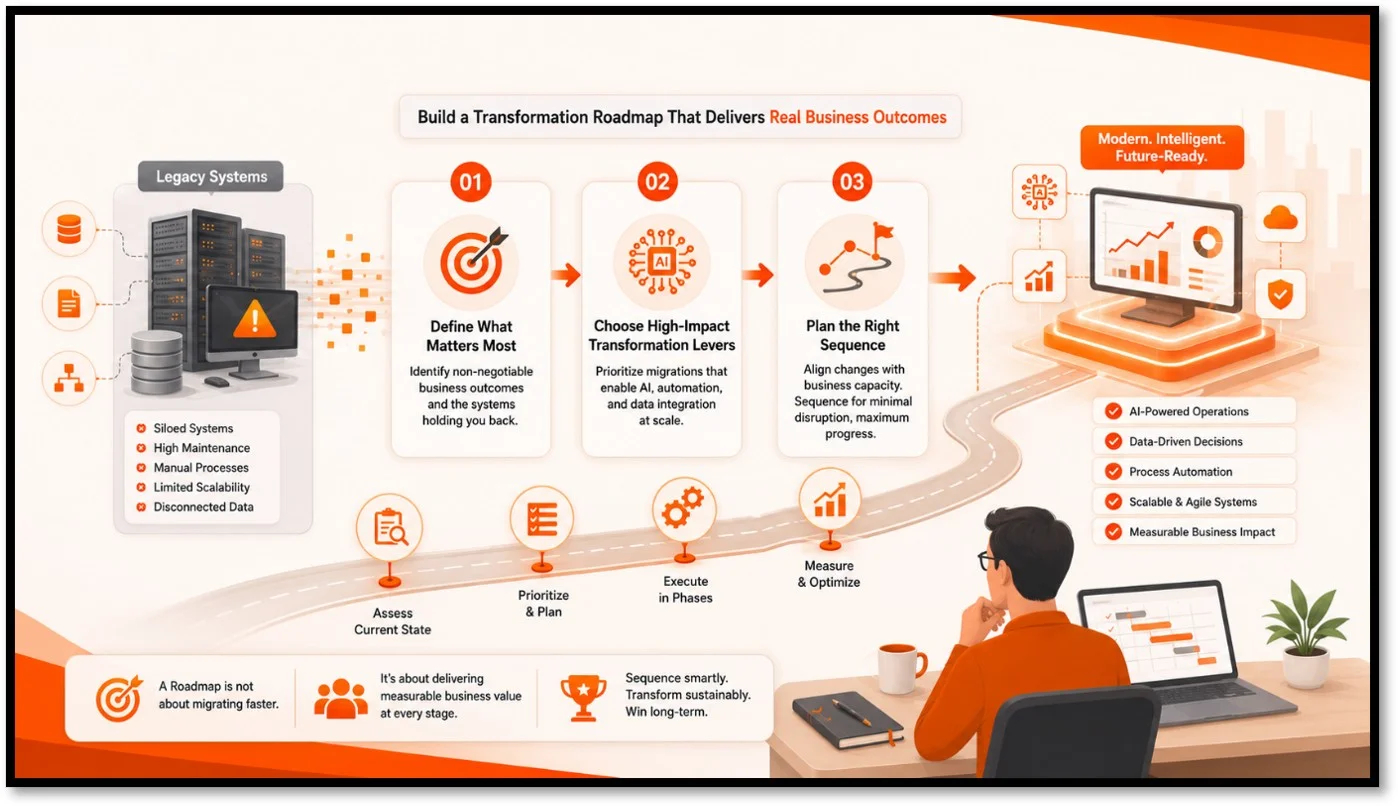
AI integration in legacy systems without redesigning workflows only digitizes existing inefficiencies. B2B teams that successfully transform digitally often sequence changes, matching the absorption capacity of the business.
More than a migration plan, a roadmap acts as a prioritization instrument. It helps teams deliver measurable business output that is built on the last stage.
How Businesses Modernize Legacy Systems Using AI?
The traditional rip-and-replace approach for modernization produces the right outcome by removing legacy systems at the wrong time. Many B2B teams fail to absorb the risks involved in completely replacing supply chain systems, a core CRM, or ERP, and the entire process is time-consuming.
The successful modern digital transformation strategy often starts by wrapping legacy systems. It deploys an AI integration layer connecting processes and legacy data to modern analytics, decisioning capabilities, and automation without affecting the underlying system.
IBM’s 2024 report suggests that 42% of B2B enterprises have actively deployed AI in their businesses. But the common mistake these companies make is to assume that every legacy system must be replaced. Before full modernization, AI layers help enterprises extract business value from existing legacy systems.
While the AI layer extracts, enriches, and routes data to modern workflows, B2B teams can streamline automation in business operations within months instead of years, and the underlying system is incrementally replaced at a manageable pace.
How Does AI Transform Enterprise Operations?
Beyond accelerating operations that enterprises were already performing, the shift from legacy systems to AI driven digital transformation has made companies capable of doing things which they could not do before.
This includes predictive maintenance, real-time demand sensing, personalized customer interactions, and dynamic pricing. The operational transformation is fundamental rather than incremental, and AI continuously improves decision-making rather than only automating processes.
AI adoption in enterprises compounds more effectively than traditional digital transformation because every deployed AI capability generates operational data that strengthens future models. The integration of AI in everyday decision-making instead of isolated workflows streamlines operational transformation.
However, business process automation (BPA) without intelligence never eliminates inefficiency, but only accelerates it, which affects ROI calculations. Although most B2B teams measure cost reduction to determine the success of digital transformation, the metric captures the least valued parameter of the process.
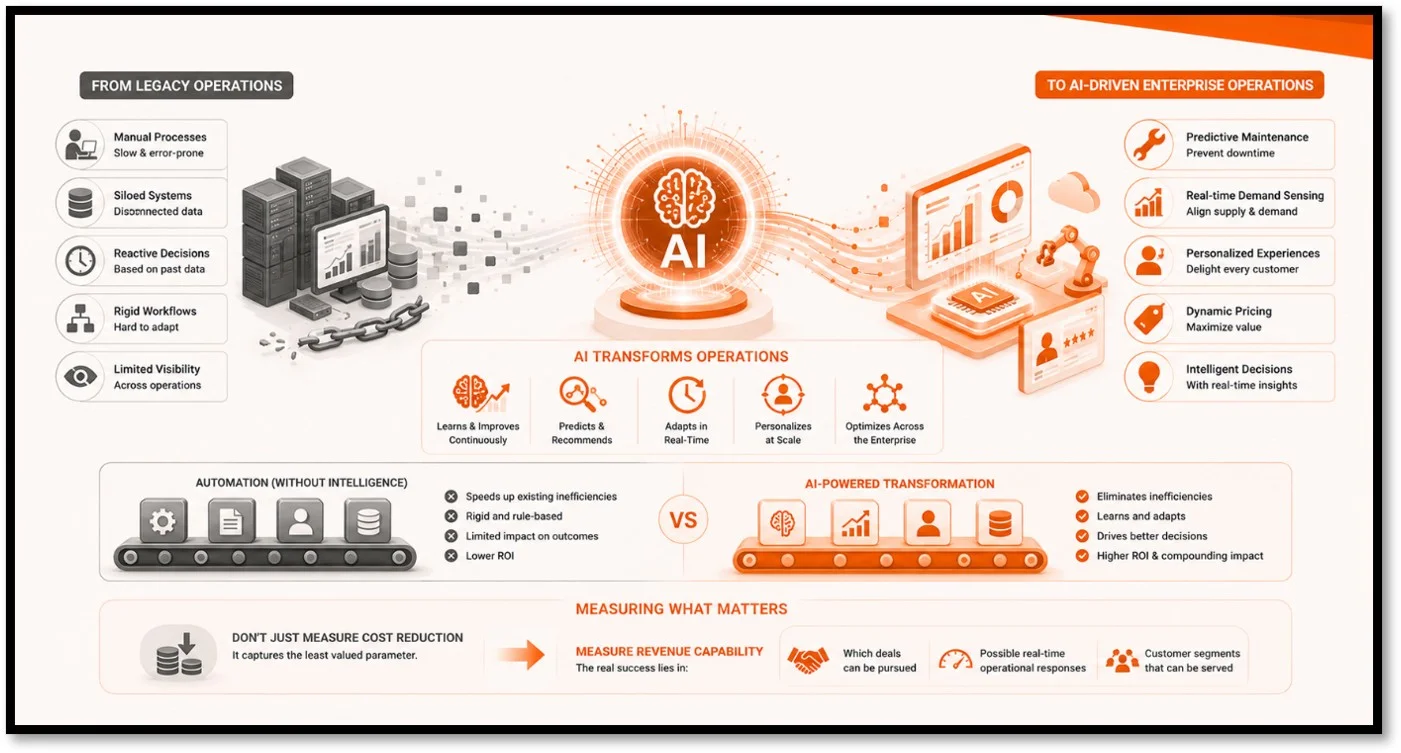
The real success lies in measuring revenue capability through metrics such as which deals can be pursued, how quickly operations can respond, and which customer segments can be served.
Key Takeaway: How to Maximize Digital Transformation ROI in Large Enterprises?
An AI powered operations transformation roadmap compounds competitive advantage with every successful modernization step and by deploying each AI capability. B2B teams that, instead of treating it as a platform procurement exercise, treat it as a sequenced investment, gain a sustained advantage through AI powered enterprise architecture.
However, teams that consider it as a one-time IT program will not transform operations. B2B enterprises employing AI enabled business operations will continue to widen the performance gap as their operations will constantly learn, adapt, and improve.
Want to know whether your current roadmap helps you prepare for AI-driven operations? Contact Knowledgeboats and find out which legacy systems still prevent you from enabling intelligent growth.
FAQs
1. How digital transformation improves operational efficiency?
Digital transformation integrates data across systems, enables real-time decision-making, helps employees emphasize high-value tasks, and reduces manual intervention to improve operational efficiency.
2. How do enterprises move from legacy systems to AI-driven operations?
B2B enterprises integrate AI with current legacy systems, migrate to cloud platforms, incrementally modernize enterprise architecture, automate key workflows, and then redesign business processes before completely replacing the legacy infrastructure.
3. How does AI driven operational transformation in enterprises improve long-term competitiveness?
AI-powered operational transformation enables B2B enterprises to act faster, continuously optimize resources, quickly adapt to changing market conditions, accurately predict business outcomes, and personalize customer experiences, which improves long-term competitiveness.
4. How does AI driven transformation for better business outcomes reduce operational costs?
AI can improve forecast accuracy, automate routine processes, minimize system downtime, enable employees to emphasize strategic initiatives, and reduce manual efforts to enhance business outcomes and reduce operational costs.
5. How does enterprise productivity improvement using AI operations create measurable value?
AI-driven operations increase employee effectiveness, generate insights that help B2B teams optimize their performance, shorten response time, and elevate customer experience, improving productivity.