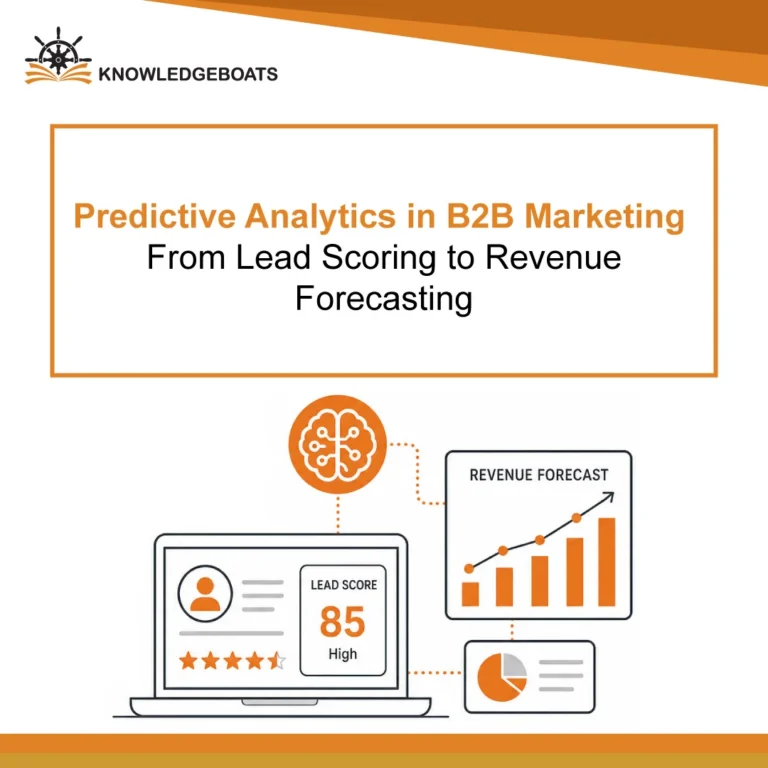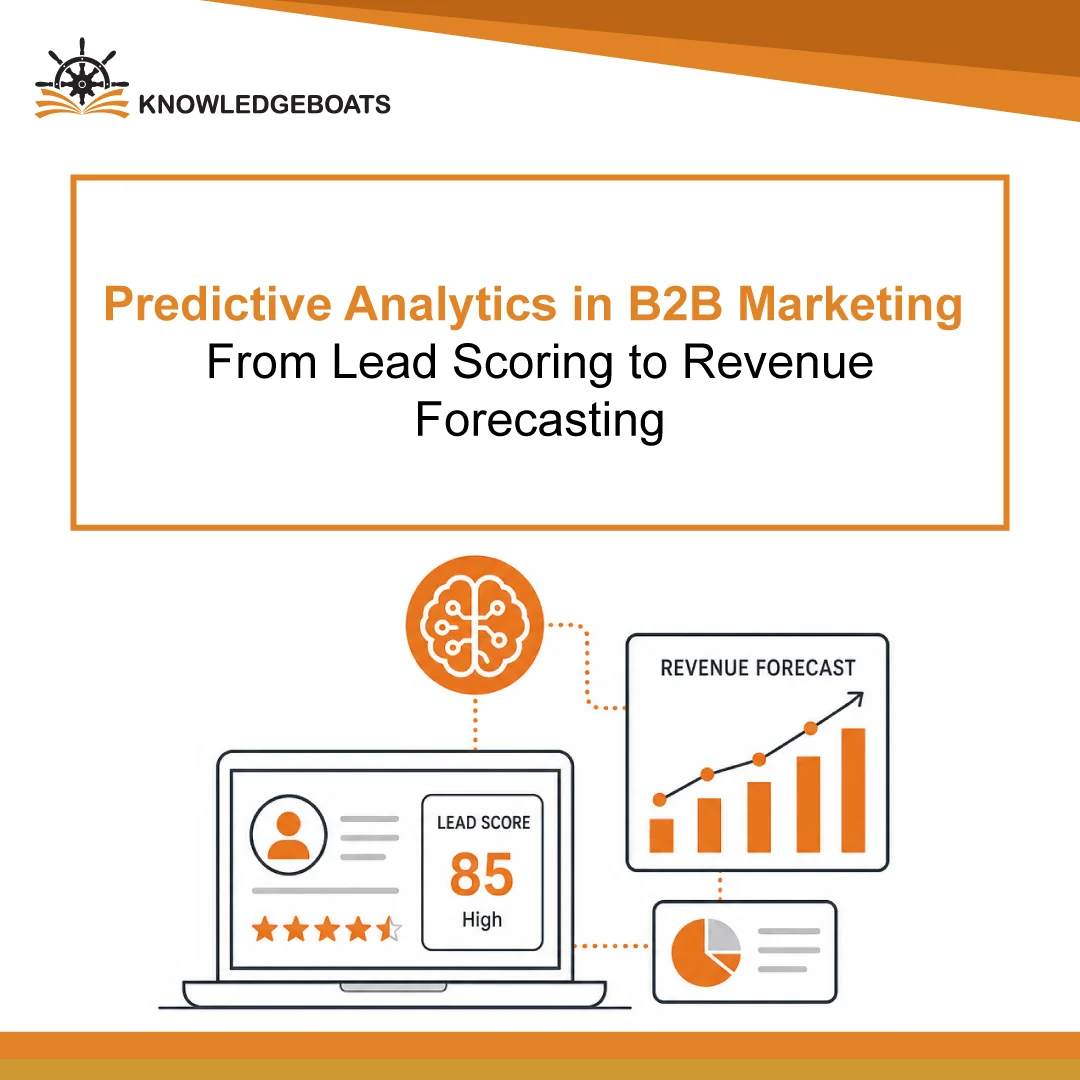
Predictive analytics in B2B marketing forecasts which leads are likely to convert and the revenue your pipeline can generate, based on historical and live data. Enterprises often emphasize B2B predictive lead scoring, but many of them stop there.
A score alone will not tell you where to invest next or how much revenue to expect. According to Forbes’ 2026 B2B Buyer Experience Study, the stakes are higher because 95% of the time, the winning vendor is already on buyers’ shortlist from day one.
You may get a confident-looking forecast based on poor inputs if you overemphasize a B2B predictive analytics tool before fixing your CRM data. Data volume does not necessarily improve your predictive lead scoring model’s efficiency.
Connecting predictions to decisions across the funnel is more commercially valuable, and so is data that drives B2B pipeline forecasting.
How Predictive Analytics Works in B2B Marketing
Predictive analytics for B2B marketing learns from historical wins and losses, then scores new accounts and leads against patterns tied to past outcomes. By combining different data sources, the model can identify leads more likely to convert, which is how predictive lead scoring works.
| Input | Examples |
|---|---|
| Outside Signals | Intent, technographic, and firmographic data. |
| CRM History | Closed-lost and closed-won deals. |
| Behavioral Data | Content views, email engagement, and site visits. |
Because predictive marketing analytics models rely on historical results, they may assign low scores to promising leads in new markets where comparable deal history is limited.
The data challenge is still increasing. Supermetrics’ 2025 research finds that 60% of B2B professionals do not have enough time to analyze their data, which worsens the problem. If your CRM records are inconsistent or produce unreliable outcomes, even the most sophisticated model may not save you.
Clear definitions and good data quality are more commercially important than complex models. A score reflects probability, not a guarantee, and predictive analytics for B2B sales pipelines needs continuous validation against actual results.
How to Use Buyer Intent Data for Lead Scoring
A B2B marketing predictive analytics model can use intent signals, such as pricing-page visits and competitor research, to help score B2B accounts, which is how predictive analytics uses intent data for lead scoring. However, not every signal should carry the same weight. You can use the following framework to weigh signals:
| Type of Signal | Examples | Weight |
|---|---|---|
| Generic Engagement | Single content downloads and email opens. | Low |
| High-intent Behavior | Repeat visits, demo requests, and pricing page visits. | High |
| Third-party Intent | Competitor comparisons and category research as identified via platforms like 6sense and Bombora. | Medium to High |
Although form fills and email opens are readily visible signals in the CRM, they rarely confirm any lead conversion prediction.
Buying decisions often involve a committee, which is why intent data performs better at the account level. To make more accurate customer conversion predictions, you should interpret intent data alongside account activity, historical conversion patterns, and ICP fit.
When multiple people in the same account research your category, they signal stronger buying intent than a single person opening multiple emails. Instead of treating siloed activity as proof of intent, combining signals gives you more accurate B2B conversion predictions.
How to Implement Predictive Lead Scoring
First, clean the CRM history. Then train and validate a lead-scoring model, route scores to sales, and review lead-scoring accuracy each quarter. This is how to build a predictive lead scoring model.
| Steps of Model Implementation | What Action Should Be Taken | When the Step Gets Completed |
|---|---|---|
| Clean CRM History | Standardize loss reasons and stages. | Assign a consistent outcome label to each completed deal. |
| Train and Validate | Test the model against deals that it has not seen. | Evaluate predictions against outcomes from deals excluded from model training. |
| Route the Lead Score | Route high-scoring leads to sales within a defined window. | Sales reviews high-scoring leads within the defined routing window. |
| Review Periodically | Compare sales pipeline predictions with actual outcomes and recalibrate the model when needed. | Compare pipeline predictions with actual outcomes and recalibrate the model when needed. |
Despite strong test performance, the model might fail if the sales team rejects leads by ignoring scores. Beyond a separate change-management activity, how well people use predictive analytics for B2B demand generation can affect performance.
Salesforce’s 2025 research finds that 84% of technical leaders need a data overhaul to meet their AI goals. The best model of predictive analytics in marketing is the one that the sales team trusts and actually uses. Begin with one high-value decision.
Ensure enough deals are completed to train the model, then expand when results are measurable. If too few deals have been completed, the model may not have enough representative data to identify reliable patterns. You should give equal importance to feedback loops, data quality, and adoption as model selection.
How to Forecast B2B Pipeline Using Predictive Analytics
You can strengthen predictive pipeline forecasting by combining sales representatives’ close probabilities with historical deal outcomes and current buying signals. According to Salesforce Einstein and Clari’s checklist, you can score each deal on the following parameters:
- Stage Age: Ask whether the deal has stalled in one stage longer than comparable wins.
- Stakeholder Activity: Identify whether relevant stakeholders have engaged with sales.
- Engagement Recency: Check whether meaningful buyer activity has decreased.
- Deal Size: Check whether the opportunity fits historical patterns for its segment.
Forecasts can become too optimistic when teams rely too heavily on CRM pipeline stages. Engagement data from the predictive analytics strategy can help you identify which deals will probably close and which might stall.
If the forecast overemphasizes outdated deals, relies on patterns that no longer exist, or uses overly optimistic CRM stages, it can mislead you, even if it looks precise.
Finance, marketing, and sales each have only a partial view of the pipeline, which is why the entire revenue team should own the forecast. You should evaluate B2B revenue forecasting accuracy against actual outcomes, and then review errors by time horizon, stage, and segment.
Instead of offering a single, standalone number to leadership, provide best, likely, and worst-case scenarios. Sales-process discipline and model performance determine forecast reliability.
How Predictive Analytics Improves Marketing ROI
B2B predictive analytics helps identify channels and campaigns that generate pipeline more likely to convert, allowing teams to invest more in effective channels and less in those that only generate leads. This will help you improve marketing ROI.
| Method Used | Question It Can Answer | Predictive Analytics Examples in B2B Marketing |
|---|---|---|
| Prediction | Which campaigns will produce deals with high closing probability? | Adjusting budget during the quarter. |
| Attribution | Which touchpoints have contributed to deals that closed? | Reviewing historical budgets. |
Predictive analytics can track what worked for B2B enterprises, which is why you cannot replace it. Without accurate predictions, decision-makers have less evidence to decide their next investment.
The finance function can allocate budget to the marketing team when it can produce a defensible forecast based on historical records. Shifting budget to higher-probability campaigns before the quarter ends can give you a head start that closed-won reports will not provide.
Things to Ponder: What Are the Benefits of Predictive Analytics in B2B Marketing
Predictive analytics can help you prioritize leads more sharply, spot buying signals early, and generate defensible forecasts your finance team will accept. This is how predictive analytics improves marketing performance.
When lead, campaign, pipeline, and revenue forecasts form a connected decision system, predictive business analytics can become commercially more valuable. By 2027, teams may be asked to explain their forecasts, because explainable predictions can earn trust and, over time, make forecasts more usable.
If you learn from outcomes and act on insights, your marketing performance predictions will become more commercially meaningful. Knowledgeboats can help you understand how to use predictive analytics in B2B marketing.
FAQs
1. Why is predictive analytics important for B2B marketing?
Predictive analytics lets teams identify buying signals early, prioritize leads, predict pipeline outcomes, and allocate budgets based on evidence rather than intuition.
2. How is predictive lead scoring different from traditional lead scoring?
Predictive scoring learns patterns from historical outcomes to predict which leads are most likely to convert, while traditional lead scoring follows predefined rules.
3. What data is used for predictive lead scoring?
You can use relevant buyer intent signals, firmographics, campaign engagement, website activity, technographics, and CRM outcomes for predictive lead scoring.
4. How does intent data improve lead scoring?
Intent data can show shifting buyer interest and account research, helping your team distinguish routine engagement from genuine, high-intent buying signals.
5. How do you implement predictive analytics in B2B marketing?
Define a measurable outcome, clean and combine relevant data, validate a model, integrate its scores into workflows, and monitor results.