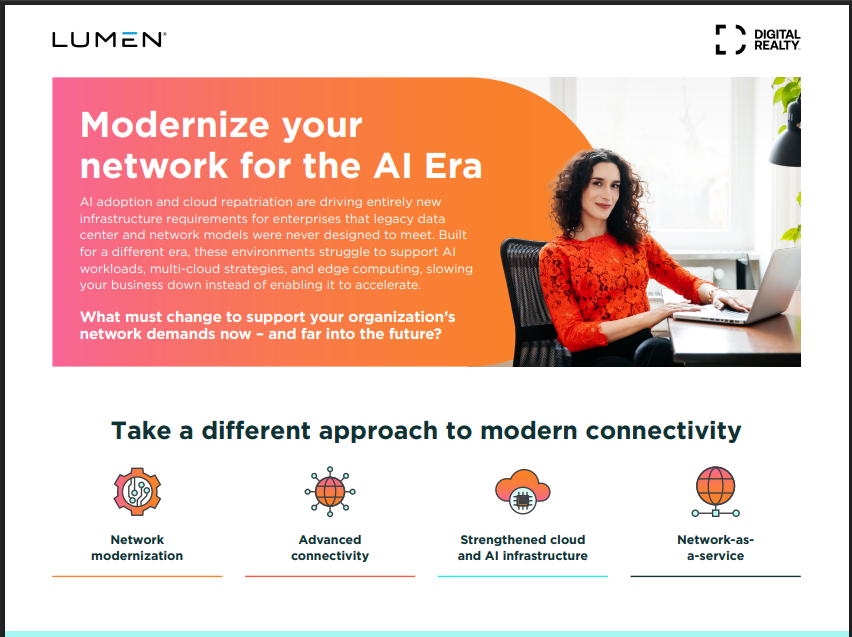
As organizations rush to deploy large language models, high-frequency analytics, and real-time machine learning pipelines, a fundamental infrastructure bottleneck has emerged: traditional enterprise networks and legacy data centers were never architected to handle the unique stress profiles of modern AI workloads or the realities of cloud repatriation. For decades, data center networking relied on predictable, static flow patterns—typically hierarchical north-south traffic designed for web apps and traditional client-server communication. Modern AI workloads, by contrast, depend on massive east-west data flow across tightly coupled compute clusters. High-performance GPU nodes require ultra-low latency, lossless transmission, and massive microsecond-burst bandwidth to train parameter-rich models without dropping packets or causing costly GPU idle times. Legacy fabrics, burdened by oversubscribed switches and traditional packet routing, quickly choke under these synchronized, data-heavy bursts.
