
Why Removing Admin Rights Is the Key to Better Cyber Insurance Rates
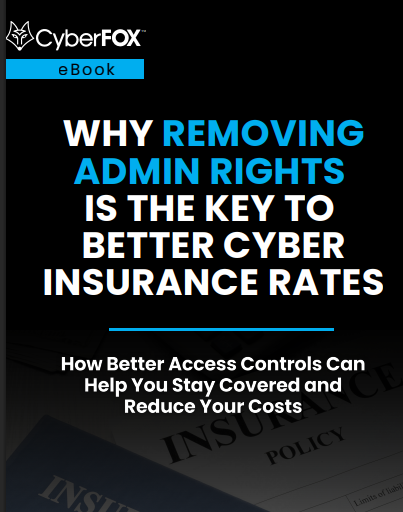
The cyber insurance application process is no longer simple. What once involved a handful of yes-or-no questions has evolved into a detailed security review. Premiums are increasing, underwriters are asking tougher questions, and organizations are being asked to prove they can prevent the most common cyberattacks. Today’s carriers are no longer satisfied with surface-level controls […]
How Cloud-Native Environments Are Redefining Highly-Regulated Industries

For decades, it’s been widely assumed that highly-regulated industries, like financial services and insurance sectors, can’t use the cloud due to regulatory complexity. This made on-prem legacy systems and data centers the default choice as companies believed they were inherently safer.
Healthy Pets, Happy Employees:

HR leaders are constantly thinking about how their benefits package can support an employee’s entire family. That means not just our human family members, but our pets as well. Like human healthcare costs, veterinary expenses continue to rise, so employees who are pet parents need better options. The way to meet this need while managing […]
How Simplifying Payments Drives Better Financial Performance

This playbook explores how healthcare providers can modernize billing and payments with new technologies. Healthcare companies need a new approach to complicated billing and payments systems if they hope to overcome rising costs, increasingly uninsured patients, and shifting patient expectations. This playbook explores how healthcare providers can modernize billing and payments with new technologies. Discover […]
Artificial intelligence

Since the advent of ChatGPT, several banks are charging ahead to take primacy in harnessing the burgeoning technology. As the banking sector further ventures into the new space, we cover the many internal and external use cases for AI and machine learning technology. INCLUDED IN THIS TRENDLINE Customers Bank deepens ties with OpenAI Banks struggle […]
Indirect Tax Compliance Pressures in Financial Services
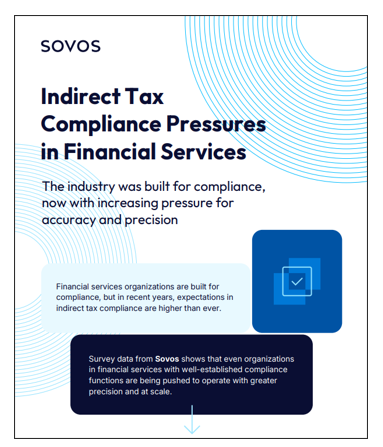
Despite being an industry built for compliance, the increasing pressure for accuracy and precision in tax compliance has reshaped the priorities of financial services. This infographic, based on survey data from Sovos, highlights how financial services are being pushed to operate with greater precision and scale. Discover five key points that are transforming how finance […]
The Channel’s Billion-Dollar Blind Spotn

Over 70% of global spend flows through channel partners. Most of the companies driving it can’t explain which partners, programs, or investments are responsible. Across Extu-managed programs with closed-loop measurement, documented sales ROI ranges from 5:1 to 69:1. Most programs never get there because they can’t see what’s working. The State of Channel Attribution 2026 […]
AI Discovery to Post-Purchase: n
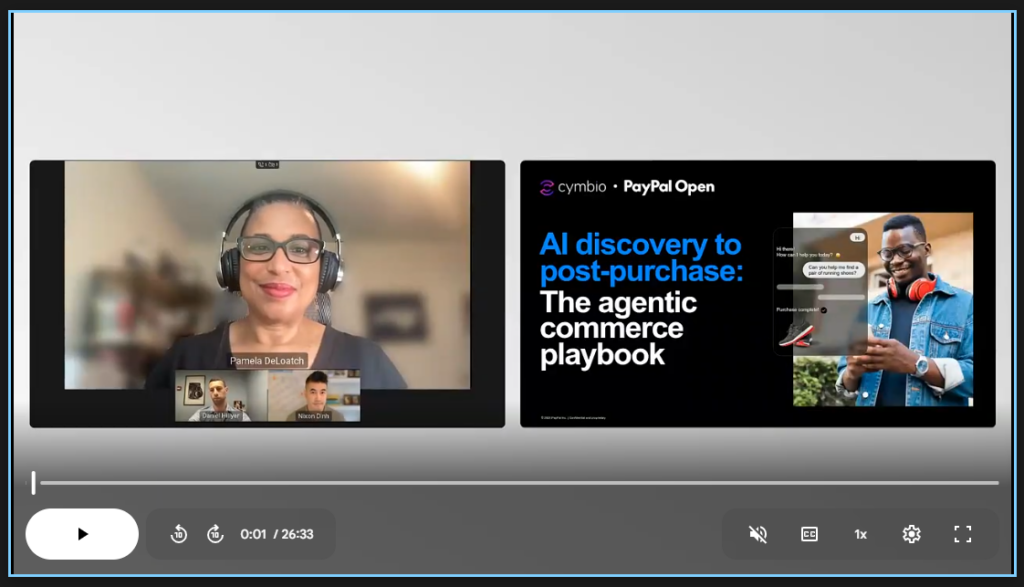
The digital shopping journey is shifting from the search bar to the agentic AI interfaces. As consumers experiment with “Answer Engines” like Perplexity and Microsoft Copilot, we have entered the era of Agentic Commerce. In this new landscape, products are starting to be discoverable and directly purchasable by consumers within their AI conversations. To compete […]
From 3 Hours to 10 Minutes:

Join Koch Ag & Energy Solutions and Sema4.ai as they share how they’re transforming one of Koch’s most manual and time-consuming financial processes – invoice reconciliation – into nearly touchless automation. The challenge: 500+ complex invoices each month, dozens of supplier formats, frequent discrepancies, and up to 3 hours of manual reconciliation per invoice. The […]
Transforming AP Automation in SAP: A Practical Path to Touchless Invoicingn

Manual AP processes create more than inefficiency. They limit visibility, introduce risk, slow cash flow, and prevent finance teams from focusing on higher-value work. Despite significant investments in SAP, many organizations still rely on manual invoice processing, disconnected workflows, and time-consuming approval cycles. The result is increased operational risk, slower decision-making, and limited visibility into […]