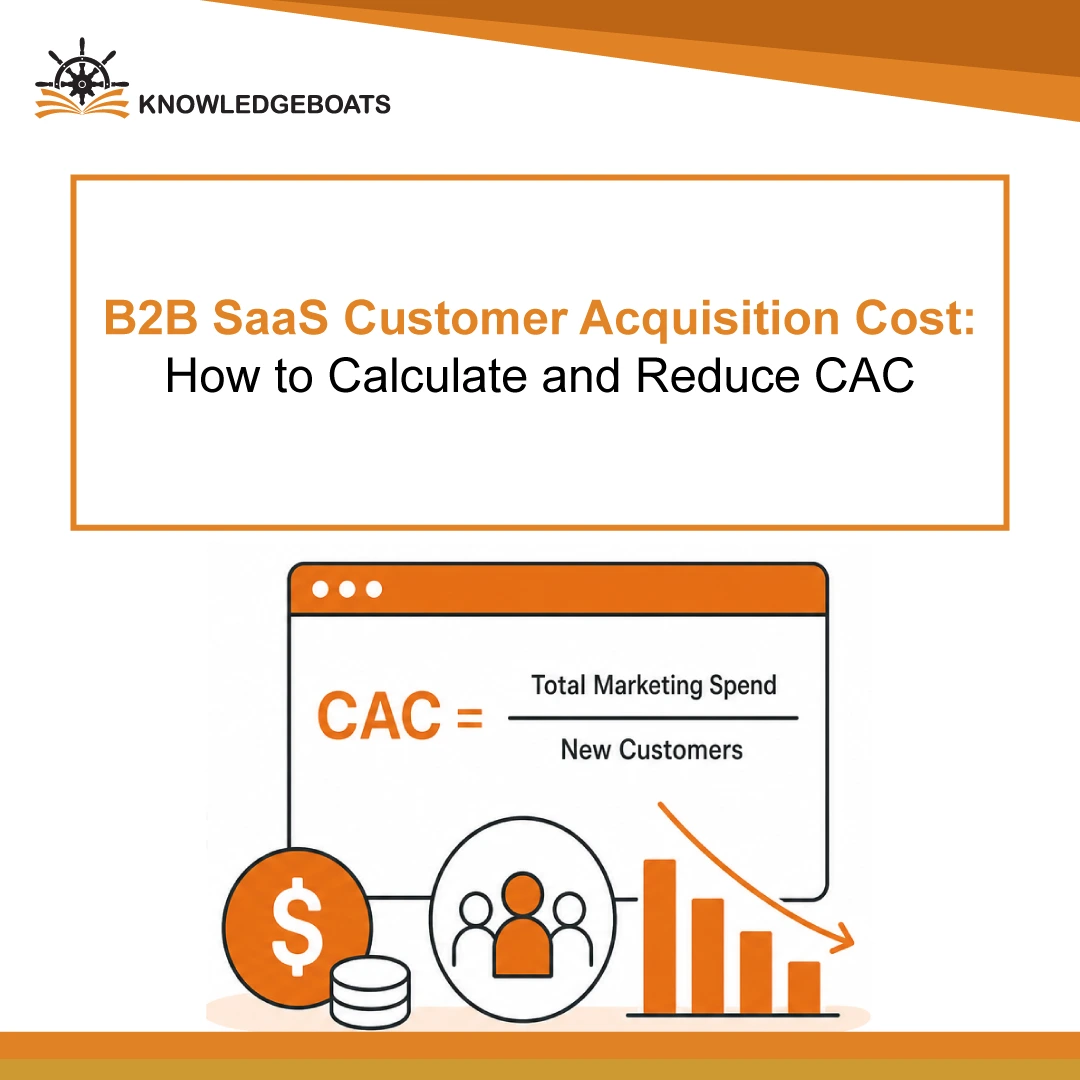
The total marketing and sales spend to convert one new customer is called B2B SaaS customer acquisition cost, and it determines how much growth costs the business. For many SaaS categories, longer B2B sales cycles, expanding buying committees, and rising paid media costs have pushed CAC upward in 2026.
The focus has shifted to accurately measuring CAC, comparing it with the right benchmarks, and systematically reducing it, rather than just calculating SaaS customer acquisition cost.
However, lower acquisition cost might not directly imply better CAC efficiency. Instead of treating it as a siloed KPI, evaluate CAC as a revenue-efficiency metric. FirstPageSage’s 2026 report puts the combined average CAC for B2B SaaS companies at $239, based on weighted organic and inorganic acquisition data.
SaaS customer acquisition cost calculations can surface acquisition inefficiencies and show where investment can be fruitful. Without improving conversion efficiency, reducing channel investment to lower CAC can create pipeline problems.
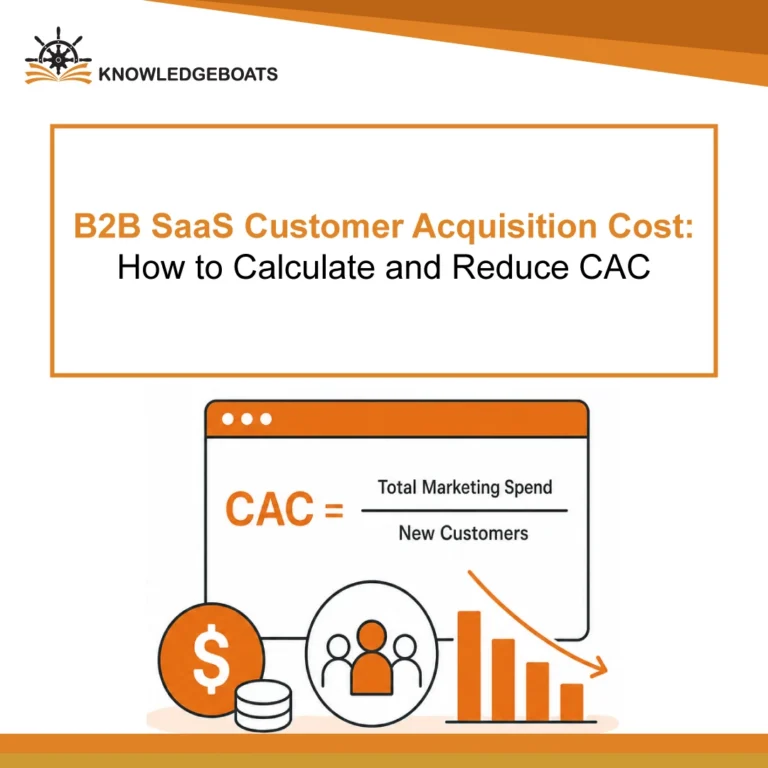
What Is the Formula for SaaS CAC
The customer acquisition cost formula gives the ratio of total acquisition costs to the number of new customers acquired. B2B SaaS CAC is usually calculated over a defined measurement period, typically a quarter or trailing 12 months.
CAC = Total Acquisition Costs / New Customers AcquiredInclude the timing gap while calculating CAC between customer conversion and acquisition spend for longer B2B sales cycles. CAC can be understated when teams omit allocated overhead, external partner costs, or acquisition-related expenses that are difficult to attribute.
| Cost Category | What Is Included in It |
| Marketing | Content production, organic channel investment, paid media spend, and events and sponsorships. |
| Sales | Commissions, benefits, bonuses, and SDR and AE salaries. |
| Agency and Contractor Spend | Freelancers, agencies contributing to pipeline generation, and external partners. |
| Tooling and Overhead | Intent data tools, sales intelligence platforms, CRM, and MAP with shared costs allocated appropriately to customer acquisition. |
Many B2B teams violate the period-matching rule, producing inaccurate and incomparable B2B SaaS CAC calculations. The completeness of cost inputs determines how reliable the B2B SaaS CAC formula is, and understated CAC can create false confidence in acquisition efficiency.
What Costs Are Included in SaaS CAC
SaaS customer acquisition costs often include sales and marketing costs tied to acquiring new buyers, including commissions, software subscriptions, salaries, and advertising spend.
The following checklist can be a practical framework to understand what should be included in customer acquisition costs:
- People Cost: It comprises benefits, commissions, and salaries proportional to acquisition responsibilities.
- Technology and Tooling: It includes sales intelligence, MAP, CRM, and intent data.
- Owned and Paid Channels: These channels include events, content production, sponsorships, and advertising spend.
- Contractor and Agency Spend: Include external partners that contribute to acquisition and pipeline generation.
SaaSUltra’s 2026 report cites that CAC has increased by 40-60% since 2023. Comparing fully loaded CAC with LTV can increase confidence in channel investment decisions. The difference between reported and fully loaded CAC can reflect acquisition inefficiency that remains invisible in unit economics.
What Is a Good CAC for B2B SaaS
An ideal CAC for SaaS companies is the one that can be recovered within a permissible SaaS CAC payback period and is proportional to customer LTV. Treating it as an absolute number might be misleading.
| Metric | Definition | Common Benchmark |
| LTV:CAC Ratio | It is the ratio of customer lifetime value to the acquisition cost per new buyer. | Commonly cited: 3:1 |
| CAC Payback Period | It is the time required to recover CAC via gross profit. | Median of 16 months |
| Blended CAC | It is the collective cost of acquisition across every channel per new customer. | Portfolio-level metric. It should be decomposed by channel. |
Early customer churn or low-margin buyers can turn a low CAC into poor economics, so evaluate CAC alongside retention, CLV, and payback. Aleph’s 2026 report finds that the median payback period for B2B teams sits at 16 months.
The payback period links CAC to cash flow, but many B2B enterprises do not include it in reporting. The correct B2B SaaS CAC benchmarks depend on customer economics, sales motion, retention, and deal size.
How to Reduce B2B SaaS Customer Acquisition Cost
Using ICP tightening, improving conversion rate across the acquisition funnel, and systematically reducing channel investments where the CAC-to-LTV ratio fails to justify the investment is how to lower customer acquisition cost in SaaS.
Many B2B enterprises focus on reducing spend rather than improving conversion, but this approach may produce less pipeline at the same unit cost.
The following practical framework can reduce customer acquisition cost:
- ICP Tightening: Emphasize accounts having stronger close rates, better retention, and shorter sales cycles.
- Stage-level Conversion Rate Optimization: Increase the number of qualified prospects becoming customers by identifying funnel bottlenecks.
- Channel CAC Decomposition: Rather than relying on blended averages, prioritize comparison between payback and channel-level acquisition cost.
- Product-led Acquisition: Deploy freemium tiers, self-serve onboarding, and free trials where the product and sales motion support self-serve acquisition.
Before cutting down channel investment that generates profitable buyers, reduce wasted acquisition. When B2B enterprises fix sources of inefficiency, CAC improvement can compound.
How ICP Affects SaaS CAC
ICP fit can determine the efficiency of each downstream CAC component because a better-fit account can close faster, require fewer touchpoints, churn less, and generate LTV that justifies CAC.
The following ICP-to-CAC impact chain can be a practical framework to understand how to calculate CAC for B2B SaaS:
| ICP Fit Signal | CAC Impact | Why It Matters |
| High | Shorter sales cycle | Less sales effort may be required to acquire each customer. |
| High | Higher close rate | CAC per newly acquired customer can be reduced. |
| Low | Longer sales cycle | The close rate can fall, while AE and SDR time per deal can increase. |
| Low | Higher churn rate | LTV might not justify CAC despite reducing absolute acquisition cost. |
Poorly targeted acquisition not only inflates CAC but also compresses LTV and extends the customer acquisition cost payback period. Beyond longer sales cycles, a customer who churns before the payback period can be an expensive buyer for a SaaS company.
Connect SaaS marketing attribution to revenue, customer acquisition, and retention data, and ensure that measurement and targeting share the same definition of a valuable customer. This is how to improve SaaS customer acquisition efficiency.
Things to Ponder: How to Calculate B2B SaaS Customer Acquisition Cost, and How to Reduce SaaS CAC
Before starting any reduction program, CAC calculation for SaaS needs a fully loaded, period-matched framework, followed by channel-level analysis. Rather than spending less, B2B enterprises that build a clear ICP, improve conversion at every funnel stage, and track attribution reliably can build efficient acquisition economics.
AI-powered prospecting tools can reduce outreach efforts and manual research. However, data quality, conversion performance, and targeting precision determine these tools’ impact on CAC.
Acquiring the right buyers at a sustainable cost should be the core objective. More than cost reduction, payback period, customer retention, conversion efficiency, and fully loaded CAC should influence acquisition decisions.
Talk to Knowledgeboats to understand how to calculate SaaS CAC and improve your acquisition economics through RevOps, attribution, and better targeting.