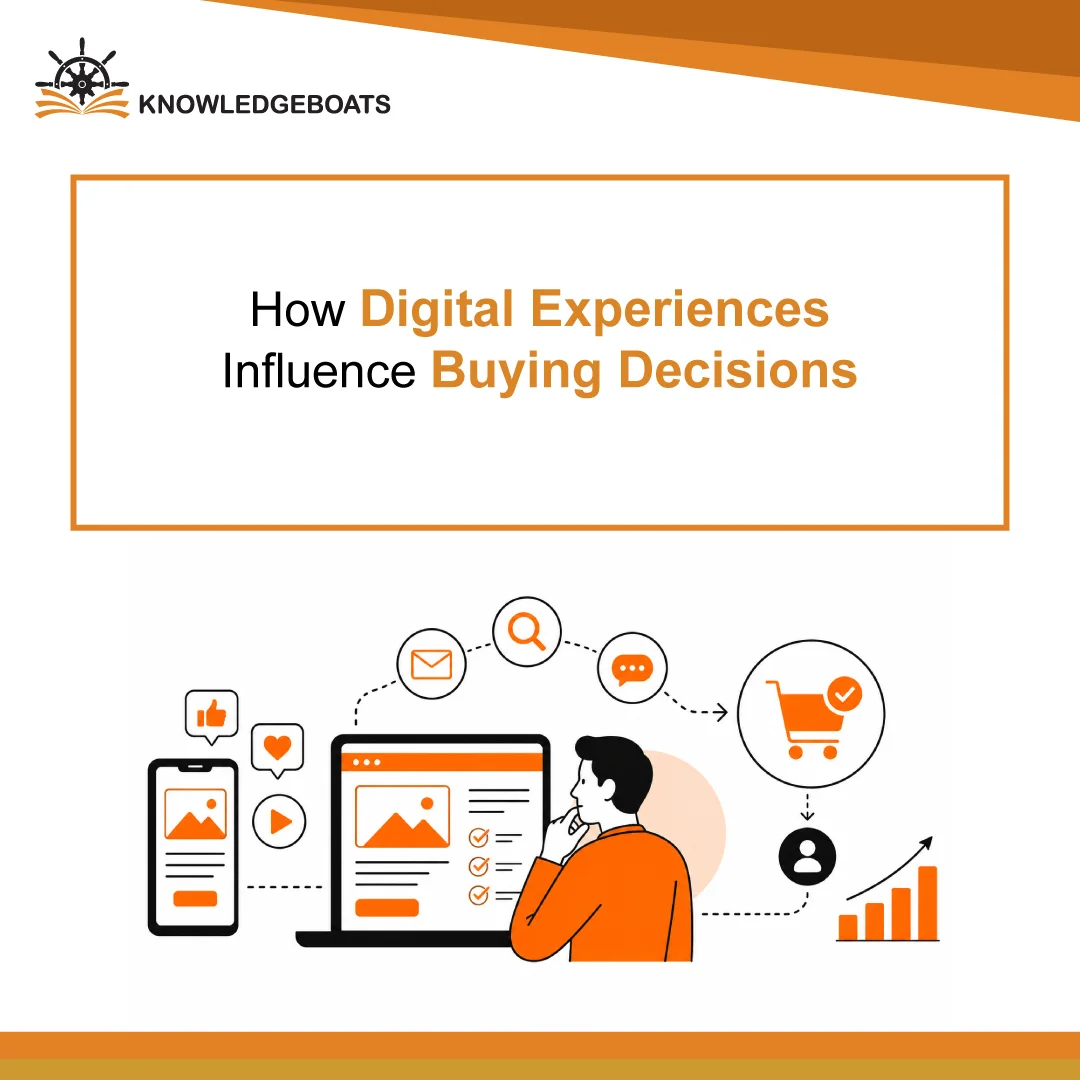
Digital experiences shape the buyer’s trust level before their first interaction with B2B teams, influencing their buying decisions. Content relevance, website quality, chatbot responsiveness, and consistency across all digital touchpoints collectively influence whether the buyer adds the vendor to the shortlist.
B2B enterprises often treat digital customer experience as a design issue, but in reality, the problem lies in trust-building. Buyers develop trust judgments while moving through the journey.
Buyer behavior is significantly changing, and customers are finding new ways to interact and engage with B2B enterprises. Gartner’s 2026 analysis finds that 67% of B2B buyers prefer a rep-free experience.
More than showcasing the best product, B2B teams that build buyer confidence before the sales conversation can reduce decision friction during sales calls.
How Digital Experiences Influence Buying Decisions
Digital experience provides the context in which much of the vendor evaluation happens, influencing buying decisions. B2B enterprises often monitor session duration, email open rate, and bounce rate to measure digital experience quality.
Although these metrics track buyers’ presence, they don’t track whether customers move toward a purchasing decision. A buyer leaving the website after spending significant time on it does not necessarily indicate a successful experience. B2B enterprises need additional signals to understand whether the buyer found what they needed.
Salesforce’s research finds that 80% of B2B buyers rate customer experience as equally high as that of products and services. The following is a suggested framework for better digital experiences for business growth:
| Decision Stage | Buyers Need | Digital Experience Should Provide |
|---|---|---|
| Discovery | Relevant information on the company, product, or services. | Useful content, clear search, and navigation. |
| Evaluation | Comparative evidence. | Product comparisons, details, and proof. |
| Validation | Credibility and confidence. | Transparency, expertise, and reviews. |
| Action | A clear CTA. | Trials, consultation, or demo. |
Vendors who answer in real time what buyers are asking often shape customer buying behavior and help buyers advance through evaluation. However, vendors that have polished interactions with customers but don’t answer buyers’ questions often have a shorter shortlist despite having a longer session.
What Is the Role of Digital Experiences in B2B Marketing, and How It Affects Buying Decisions
Rather than persuading buyers to make a choice, digital interactions reduce perceived risks to shift buying decisions. Interactions that anticipate a buyer’s information needs before a sales conversation can reduce effort and build confidence.
B2B enterprises often construct their digital experience strategy around conversion optimization. Although it is significant at the transaction layer, it might become irrelevant at the decision layer. Buyers often choose a vendor based on the confidence it gave in the team, the product, and product implementation.

Conversion and decision optimization address different problems, and many B2B teams conflate them. A better conversion rate might not imply a better buying experience, as more customers can enter a pipeline being poorly informed.
Beyond adding the buyer’s name in an email, personalized customer experience surfaces relevant information to buyer-specific situations. Behavioral analytics can compare the paths of buyers who convert with those who exit, helping teams refine which information appears at each stage.
A buyer should not have to restart their journey when moving from the website to a sales conversation, which is where the omnichannel customer experience plays a crucial role; the company should ensure continuity across all channels the buyer uses.
What Makes B2B Digital Customer Experiences Different
Buying decisions involve multiple stakeholders on a committee rather than a person, with different information needs, questions, and risks, which differentiates the digital buyer experience.
A digital-first customer experience strategy is often designed around the champion who initiated the evaluation, although the committee makes buying decisions. An experience that provides role-specific information to each member of the buying committee is more likely to support the buying decision.
Geisheker’s analysis finds that buying groups make 82% of B2B buying decisions. Rather than operating at the contact level, customer journey analytics should operate at the account level. Multiple contacts engaging in different areas can surface stronger intent than a single highly engaged contact.
Customer experience in B2B sales fails due to lack of continuity across roles. A buying process needs committee member-specific experience, which the customer experience strategy should deliver seamlessly.
How to Optimize Digital Customer Experiences to Influence Buying Decisions
Shifting the optimization goal from engagement KPIs to decision-progression metrics, which emphasize measuring whether buyers move toward a buying decision, can help B2B teams optimize digital user experience.
Though B2B enterprises respond to improving digital customer experiences with content volume, it rarely solves the problem. Rather than content calendars serving marketing metrics, growth-oriented digital experience is built around information architecture.
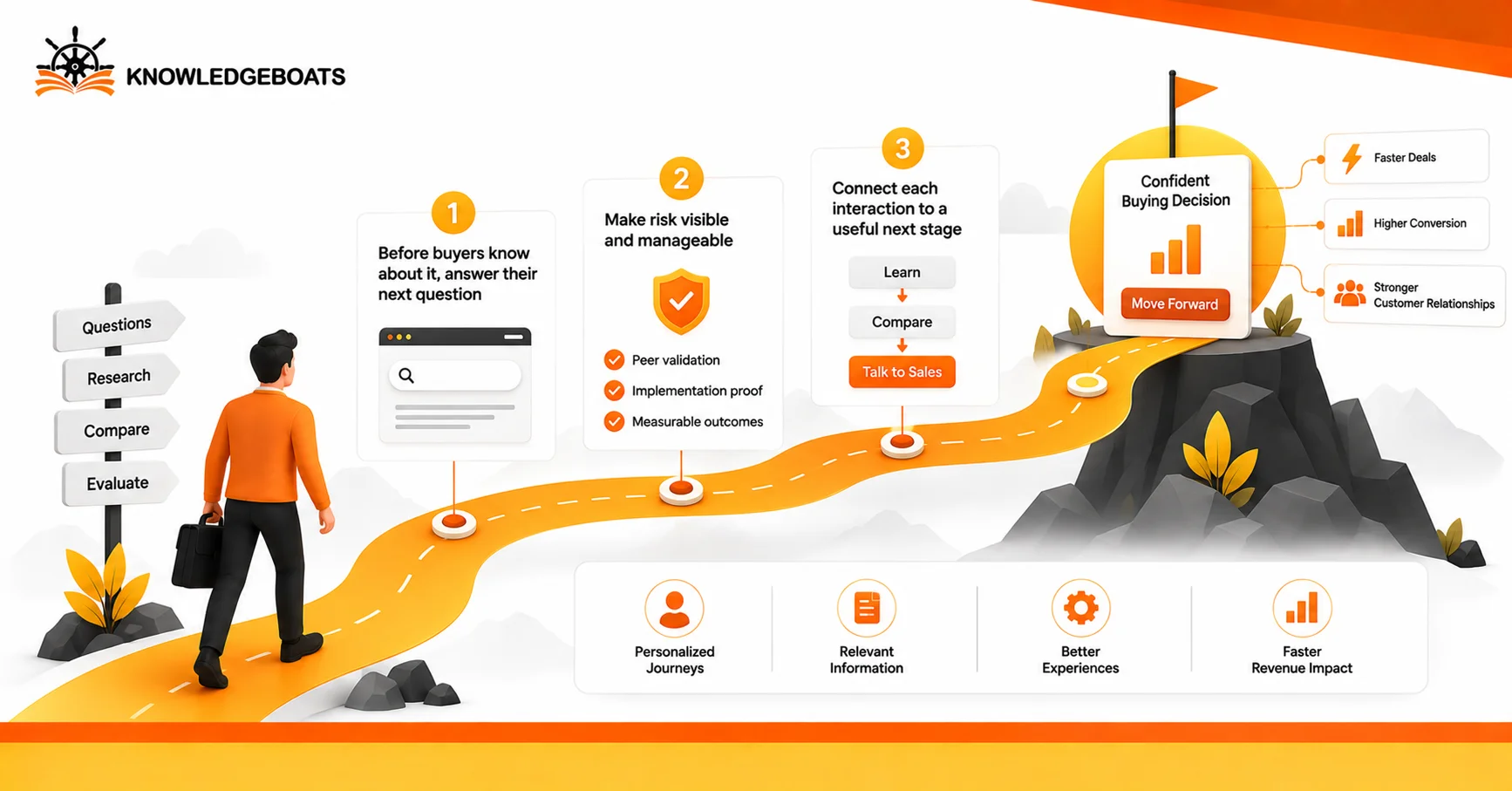
The following principles can be used for building a digital experience strategy:
- Before buyers know about it, answer their next question. Map the role-based decision sequence, and surface the required information at every stage.
- Make risk visible and manageable. Peer validation, implementation proof, and measurable outcomes can make risks visible, reducing uncertainty.
- Connect each interaction to a useful next stage. Buyers should be moved to a meaningful sales interaction rather than overburdening them with content.
A strategy that measures engagement and traffic primarily emphasizes reach. A personalized digital customer journey helps B2B buyers make a decision, which is why it can close deals faster.
Final Thoughts: How to Build a Digital Customer Experience Strategy
Rather than persuading buyers to close a deal, the digital buying journey reduces the cognitive and emotional cost of a choice, influencing buying decisions. Engagement- and traffic-based optimization prioritizes awareness over decision progression.
A B2B digital customer journey is a trust judgment sequence that is either built or left to the sales team to recover in the first call. Maturing AI-driven personalization can widen the gap between buyer situation-specific digital experience and experiences serving generic buyer personas.
Book a 30-minute digital experience audit with Knowledgeboats to identify shortcomings of your existing digital experience strategy and ways to overcome them.
FAQs
1. How do digital experiences influence buying decisions?
Digital experiences reduce information friction, build trust, and support evaluation, allowing B2B buyers to move more confidently through their buying journey.
2. How does customer experience affect purchase decisions?
Buyer experience shapes trust, confidence, willingness to continue evaluating a vendor, perceived relevance, and perceived effort, all of which can influence purchasing decisions.
3. How can businesses improve digital customer experiences?
B2B enterprises can map buyer journeys, improve information relevance, measure decision progression, and identify friction to improve digital customer experience.
4. What metrics measure digital customer experience?
Qualified opportunities, conversion, stage progression, repeat visits, drop-off, customer effort, engagement depth, and task completion can help measure digital customer experience.
5. How can omnichannel experiences improve conversions?
Omnichannel customer experiences preserve buyer context across different channels, provide customers with consistent information throughout their journey, and reduce repeated efforts to improve conversions.