B2B enterprises can detect supplier instability through supplier risk monitoring before it becomes a supply chain disruption. Companies that detect problems early and respond before they can hamper procurement often build resilient supply chains.
Many B2B teams treat supplier risk mitigation as a procurement audit task. Although this method tracks past activities, it rarely detects present issues. Rapid Rating’s 2025 research found that 81% of B2B professionals observed the business impact of supplier disruptions in the last couple of years.
Even after passing an annual review, a supplier can face financial distress in the following months and eventually experience production disruption. An annual audit surfaces neither of these problems. Instead of building during a crisis, supply chain resilience is built before a crisis through frameworks that detect risk signals early enough to act.
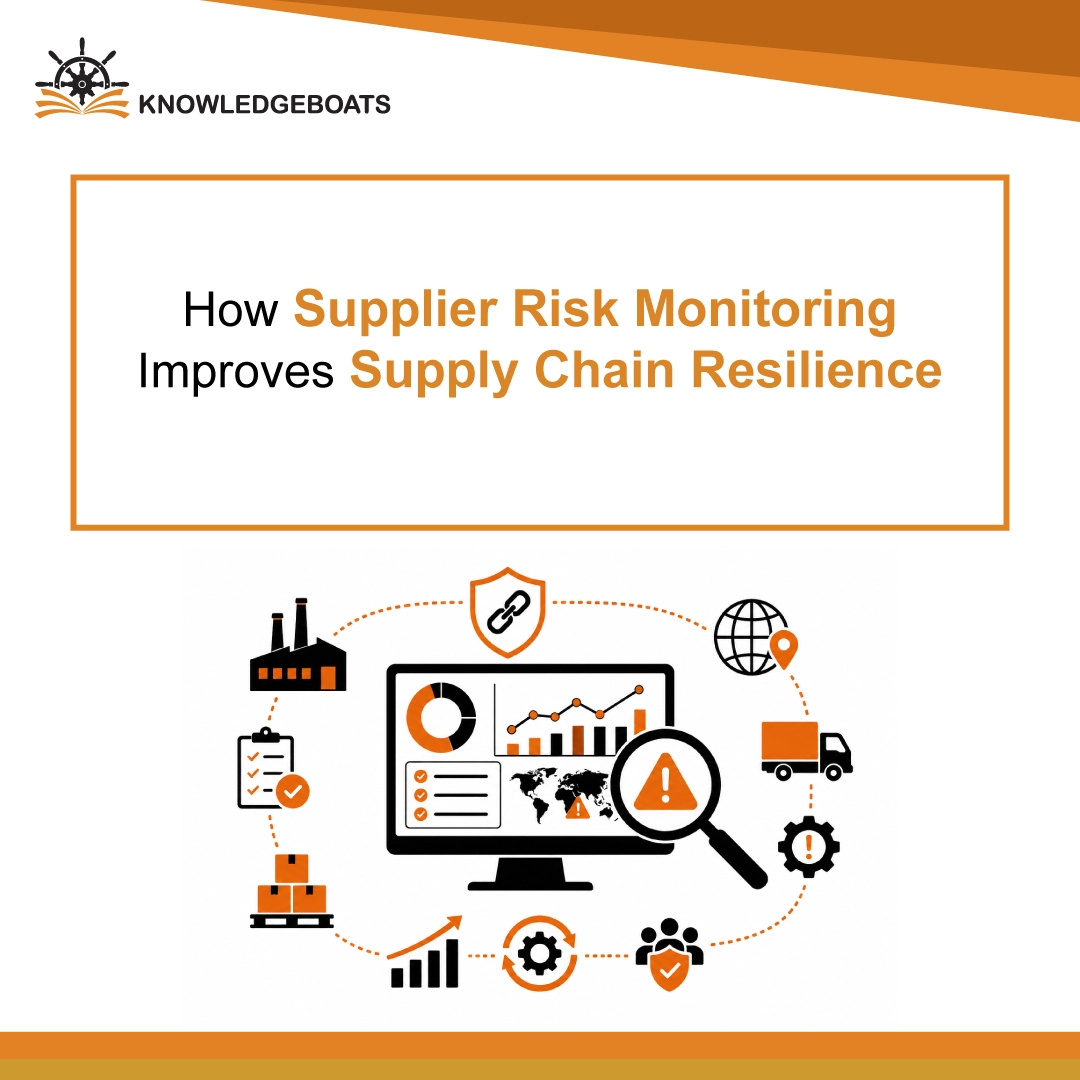
How Supplier Risk Monitoring Improves Supply Chain Resilience
When the supplier risk score does not update with changing supplier exposure, it remains mere historical evidence. The standard framing treats the supplier risk monitoring framework as a defensive capability, which often undersells its strategic value.
Continuous supplier risk monitoring for procurement teams is an offensive capability, as it can accelerate supplier document programs, surface supplier health signals, and reallocate volume. Risk management becomes more predictive when supplier risk intelligence integrates these three layers.
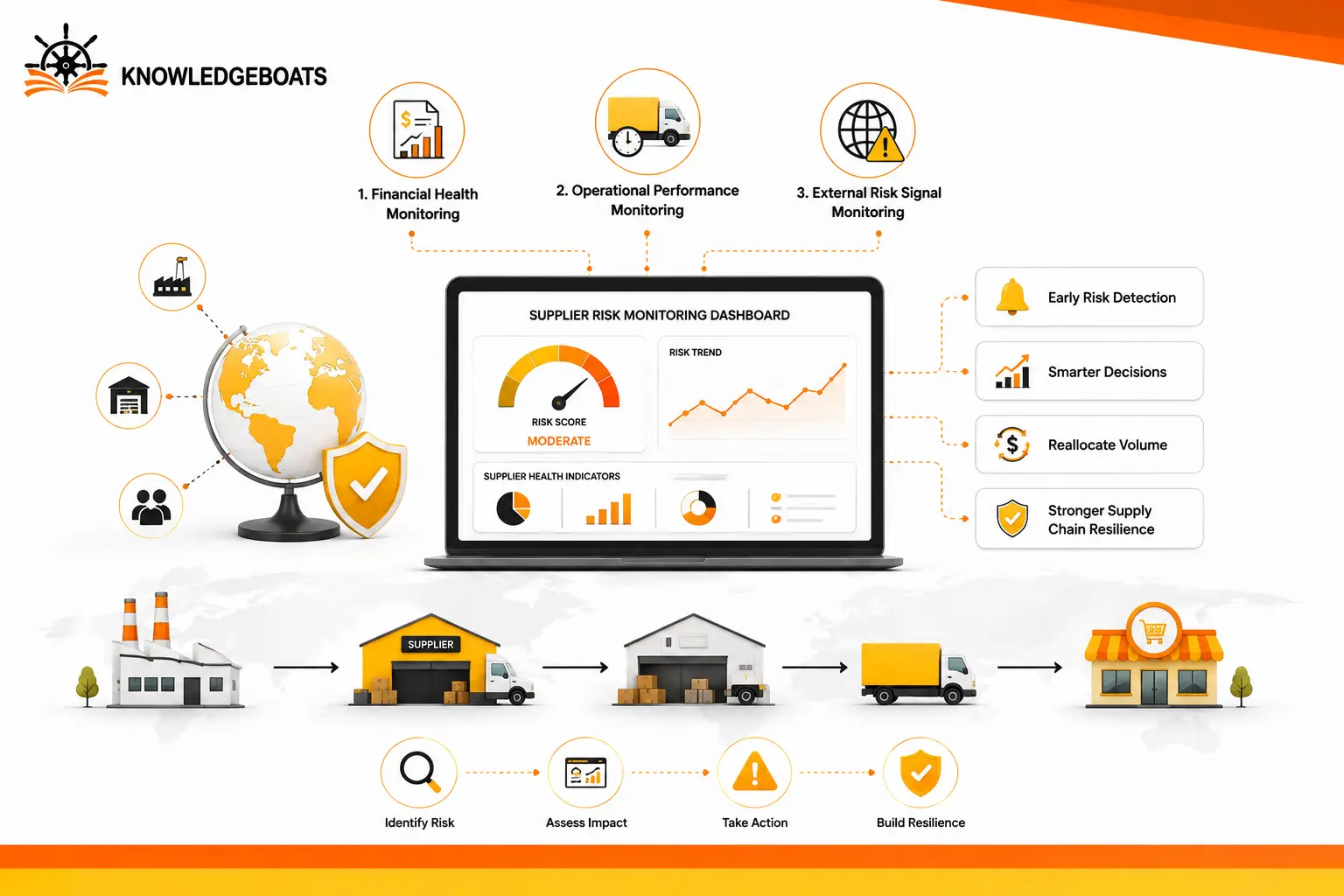
The following three capabilities determine supplier resilience:
- Financial Health Monitoring: It monitors financial stress across suppliers using available credit indicators, payment behavior, and earnings signals.
- Operational Performance Monitoring: It tracks supplier-level metrics like delivery reliability, lead time variance, capacity utilization, and quality defect rates.
- External Risk Signal Monitoring: It records third-party risk management metrics like regulatory changes, ESG violations, geopolitical events, and climate events.
Programs tracking only the last layer often miss risks originating from the first two layers. According to Procurement Tactics’ 2026 research, 94% of B2B enterprises face revenue impact from disrupted supply chains.
B2B teams monitoring quality signals in real-time often catch the failure signal early, while enterprises tracking delivery performance through a monthly audit often catch the failure late.
How Supplier Risk Monitoring Reduces Disruptions
Supply chain disruptions often appear sudden because the warning signals were not continuously monitored. Supplier risk management with continuous monitoring enables enterprises to detect failure signals early.
The difference between the time signals are detected and the response time determines how efficiently the company has employed the supplier risk monitoring process. B2B teams often concentrate their investments in supplier compliance monitoring, which can be a justified response, yet is incomplete.
Rather than describing external factors hampering a supplier’s operational capability, it explains whether the supplier meets defined standards. Supplier monitoring starts with vendor compliance, and teams should not treat it as a finish point.
Better supply chain visibility can be a solution to reduce supply chain disruptions. Deloitte’s 2025 research finds that 64% of B2B teams prioritized this solution to mitigate the risk.
Supply chain continuity programs monitor a static snapshot of a dynamic relationship by emphasizing supplier due diligence at annual compliance reviews and onboarding. Each supplier relationship evolves, and changes that matter are hardly reflected in compliance documentation.
What Factors Should Be Considered While Building a Supplier Risk Management Program
The starting point in the supply chain risk management guide is segmentation, but it is often misapplied. The framework used in the supplier risk management strategy requires the sequential execution of the following architectural decisions:
- Dynamically Define Risk Tiers: Instead of historical spend, define the supplier tier based on the existing criticality.
- Assign Monitoring Depth by Tier: While low-risk suppliers need periodic review, critical vendors require continuous multi-signal monitoring.
- Build Data Infrastructure Before Tool Selection: Define thresholds, response logic, signals, and ownership before choosing the monitoring platform.
- Integrate Supplier Risk Signals into Procurement Workflow: Risk intelligence should govern contracting, sourcing, renewal, and supplier development.
| Risk Tier | Monitoring Depth | Signal Types | Response |
|---|---|---|---|
| Tier 1 (Critical) | Continuous, real- time, and multi- signal review. | Operational performance, geopolitical, or financial health. | Immediate procurement alert. |
| Tier 2 (Strategic) | Weekly automated review with threshold-breach alerts. | Compliance certifications, delivery performance, and quality metrics. | Procurement review and mitigation plan. |
| Tier 3 (Standard) | Monthly periodic review. | Basic financial metrics, delivery reliability, and compliance status. | Exception-based intervention |
When the enterprise supplier risk monitoring strategy is built around a single platform purchase, it is more likely to fail. Procurement and supplier-management platforms such as Coupa, SAP Ariba, and Ivalua can aggregate signals from enterprise-linked data sources.
How AI in Supplier Risk Management Improves Supply Chain Resilience
Rule-based supplier risk analysis identifies risks after they cross predefined thresholds. The integration of AI in the risk management framework shifts the detection criterion from threshold-crossing to pattern identification.
Many vendors promote supplier risk monitoring software as supplier risk eliminators, which is operationally misleading. Rather than eliminating the risk, AI can extend the detection horizon by identifying patterns that conventional threshold-based systems may miss.
Early signal detection using supplier risk assessment can create time for buffer inventory, alternative vendor qualification, and renegotiating terms.
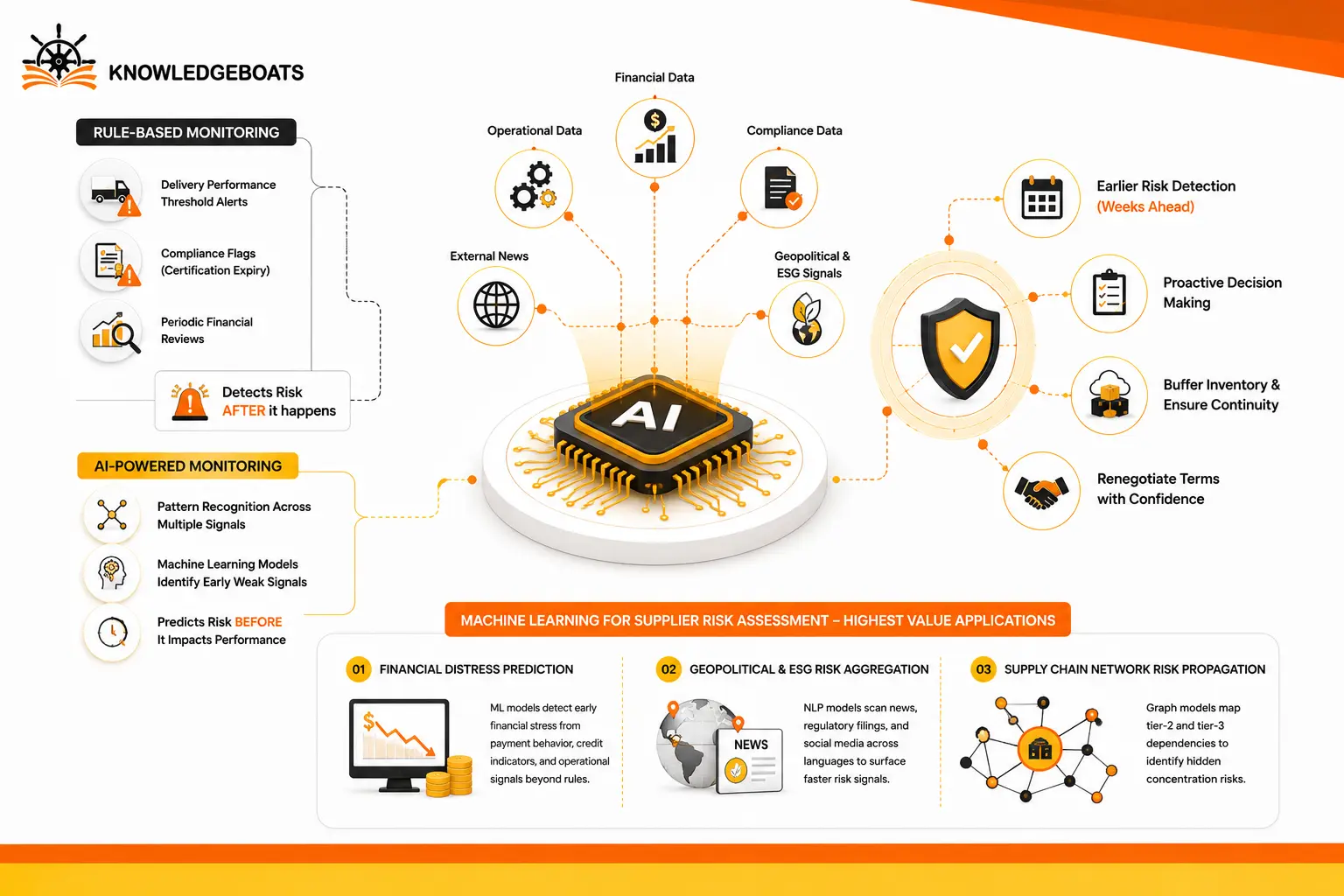
1. Financial Distress Prediction
Machine learning for supplier risk assessment uses historical patterns to detect failure signals by combining operational signals, credit indicators, and payment behavior. Rule-based systems might not detect these patterns. Procurement teams may struggle to connect multiple weak signals across a large supplier base manually.
2. Geopolitical and ESG Risk Aggregation
By monitoring regulatory filings, news, social media, and sanction data across different regions and languages, NLP models can surface supplier-related risk signals. The process is faster and allows procurement teams to spot supplier-relevant events without depending on manual monitoring.
3. Supply Chain Network Risk Propagation
Graph-based vendor risk management models identify concentration threats invisible to direct-supplier monitoring by mapping tier-2 and tier-3 suppliers. When AI connects risk signals that procurement teams own but fail to analyze at scale, it adds more commercial value.
Final Thoughts: How to Implement Supplier Risk Monitoring
More than being a procurement oversight function, the supplier performance monitoring model offers better resilience capability. B2B enterprises investing in a multi-signal and continuous supplier risk monitoring roadmap are better prepared for future disruptions.
Resilience is the property of the response and monitoring infrastructure that surrounds it. Its value compounds with each risk detected and every disruption avoided. As AI-powered risk monitoring becomes more accessible, continuous monitoring can become more practical across increasingly distributed supply chains.
Knowledgeboats can help you find where your existing supplier base faces risk signals and build a supplier performance management framework.
FAQs
1. Why is supplier risk monitoring important?
Supplier risk monitoring continuously detects operational, compliance, geopolitical, external warnings, and financial risk signals, which allows B2B enterprises to intervene before instability turns into a disruption.
2. How does supplier risk monitoring improve supply chain resilience?
It shortens the time between risk identification and response to improve resilience. As a result, B2B teams get more time to qualify alternatives, reallocate volume, and adjust inventory.
3. How can AI improve supplier risk monitoring?
By identifying risk patterns across external, operational, network, and financial signals, AI helps B2B enterprises spot emerging supplier risks before threshold-based monitoring systems detect them.
4. What are the biggest supplier risks in supply chains?
ESG issues, financial distress, cyber threats, sub-tier dependency, quality failures, regulatory changes, geographic concentration, geopolitical exposure, and capacity constraints are some key threats in supply chains.
5. How does supplier risk monitoring reduce procurement risk?
By integrating supplier risk intelligence into contracting, renewal decisions, and sourcing, teams can complement periodic due diligence with continuous monitoring. This helps identify supply chain risks before they become disruptions.