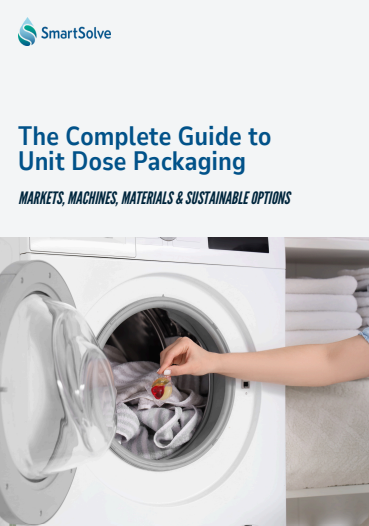
Unit dose packaging is growing fast across household cleaning, personal care, food and beverage, and agriculture — but the material decisions behind the format are no longer neutral. This guide covers the key markets driving demand, how FFS equipment works, the full material landscape from conventional plastics to PVOH to bio-based alternatives, and what brands need to evaluate as EPR legislation and consumer expectations tighten. What you will learn: Which markets are driving unit dose packaging growth, why the format is gaining ground across categories, and what the real environmental tradeoff is at the volumes these formats are produced How the major packaging machine types — VFFS, HFFS, blister, and rotary drum — work, what formats they produce, and why machine compatibility is the most practical barrier brands face when evaluating sustainable material alternatives What distinguishes conventional plastics, aluminum foil laminates, and PVOH water-soluble films from bio-based alternatives like PureNil™ 0, and how to evaluate materials against sustainability goals, regulatory readiness, and existing equipment