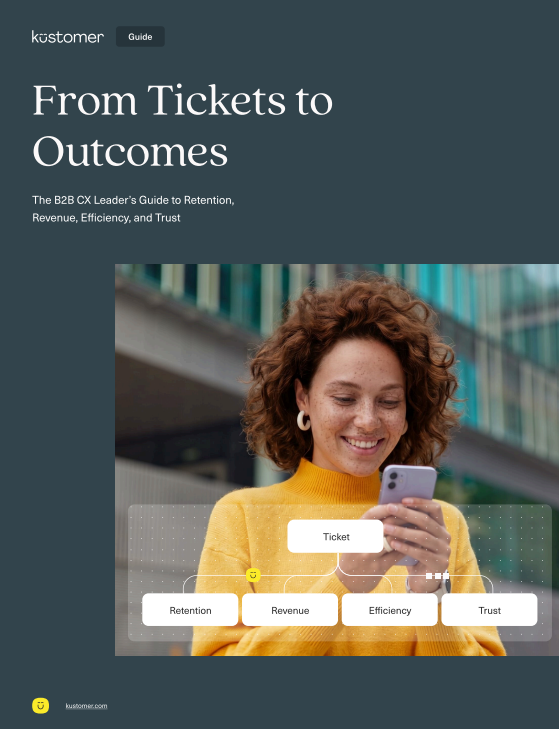
B2B customer experience teams play a pivotal role in driving business growth. But the systems they use and the metrics they track often don’t reflect it. Ticket volume, average handle time, CSAT scores: these are operational inputs. They tell you how the machine is running. They don’t tell you anything about the core business outcomes that CX plays a direct role in driving. The outcomes that actually move a B2B business are retention, expansion, and revenue. A support team that closes 10,000 tickets and loses a $200K renewal has failed, no matter what the dashboard says. Yet most platforms, and most teams, are still organized around the ticket. At the same time, the operating environment has shifted. AI has raised customer expectations, accelerated competitive pressure, and made the gap between good and bad CX more visible than ever. This guide is all about closing that gap. Not by adding more tools or convoluted reporting layers, but by reorienting around what B2B customer experience actually requires: relationship context, proactive signals, cross-functional coordination, and AI that works inside real operations rather than around them.