If you work in cybersecurity, you know the drill. We spend millions locking down the perimeter. We encrypt every hard drive to protect data at rest. We wrap every connection in TLS to secure data in transit. We have built a fortress with ten-foot walls and a steel vault. But there’s always been a blind spot. A moment of vulnerability that keeps CISOs up at night.
To do anything with data, i.e. to run a query, train an AI model, or process a transaction, you have to unlock the vault. You must decrypt the data in the system memory (RAM) and the CPU. For those few milliseconds, your most sensitive assets are sitting there in plain text, exposed.
This is the data in use problem. And for a long time, we just accepted it as the cost of doing business.
But that is changing and we are seeing the rise of Confidential Computing, a shift that finally lets us close that last open door. It’s moving data in use protection from a theoretical concept to a practical reality, and honestly, it’s arriving just in time.
Here is a look at why secure data processing is suddenly the hottest topic in cloud architecture and how it changes the game for the enterprise.
What is Confidential Computing?
At its simplest level, Confidential Computing is about trust or rather, the lack of it.
Traditionally, if you run a workload in the cloud, you are implicitly trusting the entire stack: the hardware, the hypervisor, the operating system, and the cloud provider’s admins. If a hacker gets root access to the OS, or if a rogue employee at the data center decides to snoop, they can see what’s happening in memory.
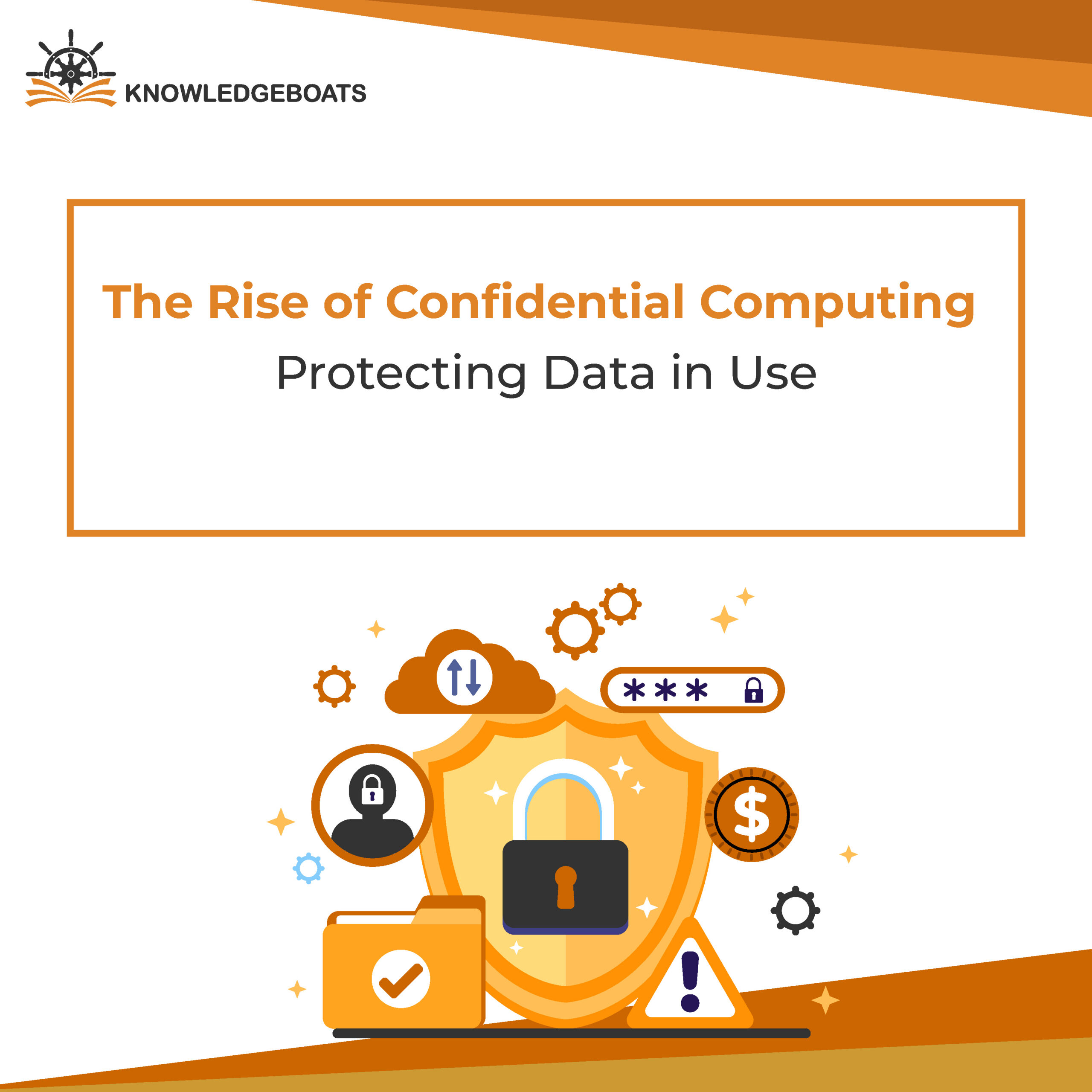
Confidential computing flips this script using Trusted Execution Environments (TEEs).
TEE is like a secure, soundproof meeting room inside a busy office building. Even if the building (the server) is compromised, and people are running through the hallways (the OS and Hypervisor), they can’t see or hear what is happening inside that specific room. The room is locked from the inside.
This is hardware-based data protection. The CPU itself creates a secure enclave. The data is decrypted only inside the silicon for the nanosecond it takes to process, and then it’s immediately re-encrypted. It’s enclave technology for data protection that effectively removes the cloud provider from the circle of trust.
Why The Sudden Hype?
TEEs have been around for a while (Intel SGX isn’t exactly new), so why is everyone talking about confidential computing adoption drivers right now?
In my experience, it comes down to three things:
1. The Crown Jewels are Moving
For years, banks and healthcare giants kept their most sensitive workloads on-premise. They used the cloud for the web front-end, but the core databases stayed in the basement. They needed secure compute for cloud workloads, and the public cloud just wasn’t secure enough. Confidential computing changes the risk calculus. It allows enterprises to lift and shift strictly regulated data without terrifying their legal teams.
2. The Compliance Vice Grip
Regulators are getting smarter, GDPR, CCPA, and HIPAA are asking about the entire lifecycle. Regulatory compliance with data in use is the new bar to clear. If you can prove to an auditor that your customer data is technically invisible, even to the server it’s running on, you are in a much stronger position.
3. Data Sovereignty
This is a big one in Europe. If a US cloud provider processes German data, does the US government have the right to see it? With data sovereignty and confidential compute, the argument becomes mathematical, not political. If the keys are held by the customer and the data is processed in an enclave, it doesn’t matter where the physical box sits.
The Killer AI and Collaboration
This is where things get really interesting. The most exciting use cases are about security and utility.
We are entering an era of collaborative intelligence. Think about confidential computing for AI/ML workloads. Let’s say three competing banks want to train an AI to spot money laundering. To do that, they need to pool their data. But they can’t just hand over their transaction lists to a competitor, that’s corporate suicide.
With confidential computing for hybrid/edge scenarios, they can use Multi-Party Computation. They feed their encrypted data into a central TEE. The AI trains inside the enclave, learns the patterns, and spits out the resulting model. No bank ever sees the other banks’ raw data. The data remains private, but the insight is shared.
We are seeing similar patterns with edge computing and confidential computing. If you have an IoT device processing health data in a patient’s home, you can’t guarantee physical security. Someone could steal the device. But if the chip enforces confidentiality for processing sensitive data, the thief gets a piece of hardware, not the patient’s records.
Who Supports What In The Cloud Landscape
If you are looking to deploy cloud services with confidential computing, the “Big Three” are all racing to win your business.
- Microsoft Azure was the early mover here. They’ve bet big on confidential computing cloud infrastructure, pushing hard on Intel SGX and offering a robust set of tools.
- Google Cloud has taken a fascinating approach with their Confidential VMs (powered largely by AMD SEV). Their pitch is simplicity: you don’t need to rewrite your code. You just toggle a switch, and your VM memory is encrypted.
- AWS joined the party with Nitro Enclaves. They focus heavily on isolation, allowing you to carve out totally separate environments for data in use security.
How major cloud providers support confidential computing instances and what it means for data in use security varies by vendor, this is becoming a standard utility.
What Do You Need to Know?
I don’t want to paint a picture that this is a magic easy button. If you are looking into Implementing Trusted Execution Environments (TEEs) to secure data during processing, you need to be realistic.
First, there is performance. You are asking the CPU to encrypt and decrypt memory pages constantly. While modern silicon is incredibly fast, there is a tax. It’s getting smaller every year, but it’s there.
Second, there is refactoring. Depending on the technology you choose (process-based enclaves vs. VM-based encryption), you might need to change how your application is architected. What enterprises should know about adopting confidential computing for cloud workloads and sensitive data is that lift and shift is possible, but lift, shift, and optimize is better.
And finally, Key Management becomes your religion. If you lose the keys to the enclave, you don’t just lose access and that data is gone forever.
Wrapping Up
We are moving toward a Zero Trust world. We used to trust the network but that stopped working. We used to trust the OS and that turned out risky. Confidential Computing assumes the infrastructure itself is hostile.
By focusing on data in use security, we are finally plugging the gap. Whether it’s enabling real world use cases of confidential computing in finance, healthcare and government for data in use protection or just ensuring your customer list stays private, this technology is the future of the cloud.
The walls are getting higher, but for the first time, we are also locking the room where the work actually happens.