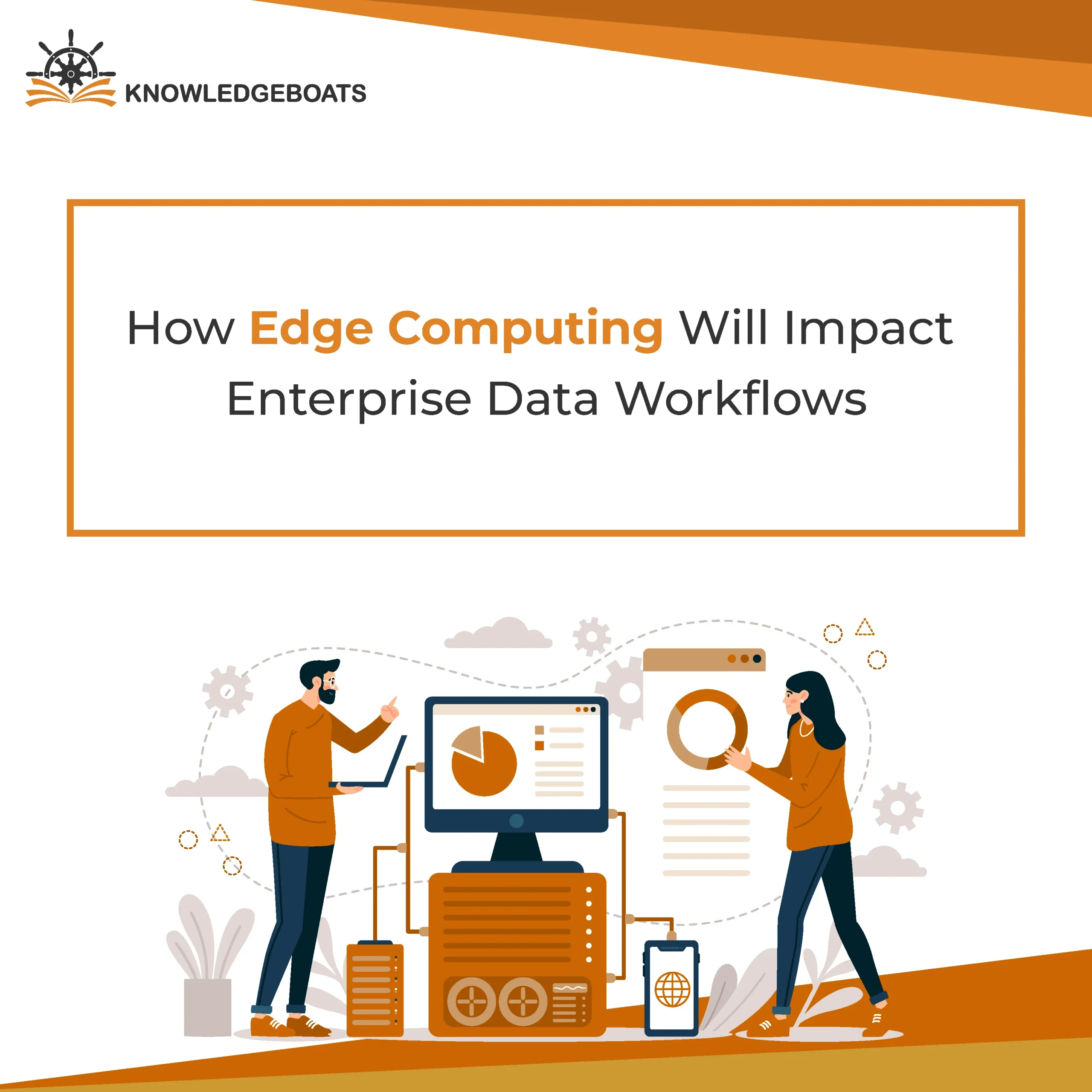
B2B enterprises are drowning in data. The quantity of data they generate is hard to handle for their cloud pipelines. The core problem is the latency in data travel. The decision gets delayed by every millisecond as the raw data travels to and fro to the centralized system, costing enterprises.
Edge computing for enterprise data processing steps in at this point, addressing the equation. Instead of replacing the cloud, it shifts data processing closer to the data origin to fix its shortcomings.
According to Forbes analysis, 75% of the data will be generated beyond cloud environments and traditional data centers. The architectural shift has already started, but whether your data workflows can manage it is the real question.
What is Changing in Edge Computing Data Architecture
Traditionally, all the data would flow to the central cloud, where it would be processed, and insights would be returned. Although the practice was simple, it catered to manageable data volumes and time-independent decisions. But both these conditions have become void today.
From hub-and-spoke to distributed processing, data architecture has evolved. The cloud has not become outdated. It still handles long-term storage, model training, and deep analytics. Edge, on the other hand, caters to operations that require speed.
For instance, vibration sensors sent raw data they collected from the machinery to the central server, where it processed it, analyzed anomalies, and triggered the response. This required a few seconds. The distributed edge model reduces this model to a few milliseconds.
The Impact of Edge Computing on Data Workflows
From adjusting the data movement, to its processing, and its departure, edge computing affects the data workflows in three concrete layers-
Data Ingestion
Data in the cloud pipeline is pushed upstream. This not only floods the bandwidth but also increases its cost. Edge computing filters and pre-processes the data at the source before it leaves the system. It ensures that only the relevant data stream reaches the central data pool.
For instance, a logistical company manages a fleet of 20,000 GPS-enabled trucks. The company does not have to stream raw telemetry from every vehicle. Edge nodes, placed on every truck, process the data locally and forward only exceptions, like overspeeding, route deviations, etc., to the central data lake.
Real-time Analytics
Cloud data analytics cannot handle real-time decisions. It caters to batched data analysis. Edge computing for real-time enterprise data, on the other hand, handles its origin.
For example, retail stores that employ in-store edge servers can detect real-time anomalies at the point of sale. It can arrest the fraudulent transaction cluster before it creates any damage, unlike cloud analytics.
By tweaking the decision-making point in the pipeline, edge computing can help enterprises scale.
Triage and Data routing
Edge nodes determine if the data will remain local, be compressed for forwarding, or it will be discarded.
For instance, compliance-sensitive data, like financial transactions, is locally stored, whereas high-frequency operational data can be summarized before uploading to the cloud.
Rather than being just a performance upgrade, this three-layered framework offers a structural shift to data workflow management.
Benefits of Edge Computing for Enterprise Data Workflows
Distributed data processing at the edge reduces latency. Round-trip cloud calls do not constrain time-sensitive workflows. Industry reports suggest that edge computing reduces the latency by up to 90%.
Beyond being only a performance goal, an almost instantaneous response is a necessity for fields like financial services, healthcare, and manufacturing.
Another benefit is the bandwidth cost reduction. As the relevant data reaches WAN, the raw volume remains local. This becomes financial leverage for enterprises focusing on IoT-heavy operations.
Rather than spending on raw data transfer, these organizations can invest more in analytics infrastructure.
Compliance and data residency provide an edge to companies operating across different jurisdictions.
Resilience is another benefit of edge computing and data workflow optimization. Edge-enabled workflows remain unharmed with cloud connectivity. For industries like retail, manufacturing, and utilities, downtime is directly connected to revenue loss.
Operational resilience, achieved via independent local processing, becomes a core need for such companies.
Building a Strategy for Enterprise Data Workflows with Edge Computing
Here is how you can develop a sound strategy to manage your data workflow:
- As the first step, map your latency-sensitive workflows. Prioritize the data that might slow down or fail your processes, and only emphasize that.
- Choose the appropriate deployment model. While microdata centers work best for branch office networks, on-premise servers cater to high-volume environments. If your system involves 5G-connected devices or mobiles, Telco MEC will be the correct choice for you.
- In the following step, define the edge-cloud data split. Decide which data will be discarded, retained, or processed. It will simplify edge computing integration with data lakes and warehouses.
- As the last step, address security. Edge nodes magnify the attack surface. Zero-trust models, thus, will become crucial.
Barriers to Adopting Edge Computing in Enterprise Data
Here are the three common hurdles in adopting edge computing, along with solutions to overcome them:
- Edge Sprawl: The centralized management becomes more complex as the number of nodes increases. To mitigate the challenge, invest in early edge orchestration platforms like Kubernetes. It allows consistent deployment with monitoring and updates across distributed nodes.
- Interoperability Gaps: These gaps between cloud and edge bother many B2B marketers. Edge computing and hybrid cloud integration need open APIs and standard data schemes before finalizing the architecture.
- Skills Gap: Lack of talent remains another crucial hurdle for B2B companies. Investing in training is a more viable solution in these cases rather than blasting a hiring drive.
Final Thoughts: Edge Computing Will be the Future
Rather than treating edge computing as a replacement for the cloud infrastructure, it needs to be considered as a workflow design decision. Using this framework, you can analyze where the correct processing occurs in your pipeline.
Relying on centralized systems with the growing data volumes will hamper your pipeline. Hybrid architectures are the future of edge computing in enterprise data. B2B marketers choosing edge computing will be positioned better as we move through 2026.
Struggling with data workflow management? Contact KnowledgeBoats to understand how edge computing will help you resolve your core problems.
FAQs
1. How edge computing improves enterprise data workflows?
Edge computing processes the data closer to the source, which reduces latency and enables real-time analytics. It also ensures data pipeline optimization.
2. How to integrate edge computing into enterprise data pipelines?
Firstly, map latency-sensitive workflows, followed by defining the edge and cloud data split. You can employ open APIs and standardize schemas for resolving interoperability issues.
3. What are the best edge computing practices for enterprise data teams?
Enforcing zero-trust security across all edge nodes, deploying orchestration tools to cater to node management, and standardizing data schemas across cloud environments are some of the best practices for enterprise data teams.
4. What are the key edge computing adoption challenges in enterprise data?
Interoperability gaps, edge sprawl, and a shortage of internal skills are three key barriers to the adoption of edge computing in enterprise data.
5. How edge computing supports real-time analytics in enterprises?
Edge computing processes data at its origin. It restricts the cloud round-trip delay. Edge computing also allows sub-second analytics decisions for financial, retail, healthcare, or manufacturing operations.