If you’ve ever worked in procurement or supply chain management, you know the struggle. You’re standing on a warehouse floor, or maybe a construction site, and you need to order a part. But to do that, you have to walk back to a desk, log into an ERP system that looks like it was built in 1995, click through six different sub-menus, and type in a 12-digit SKU.
It feels clunky, slow, and honestly outdated. Especially when you consider that on your drive home, you can just ask your car to order dinner or text your spouse without lifting a finger.
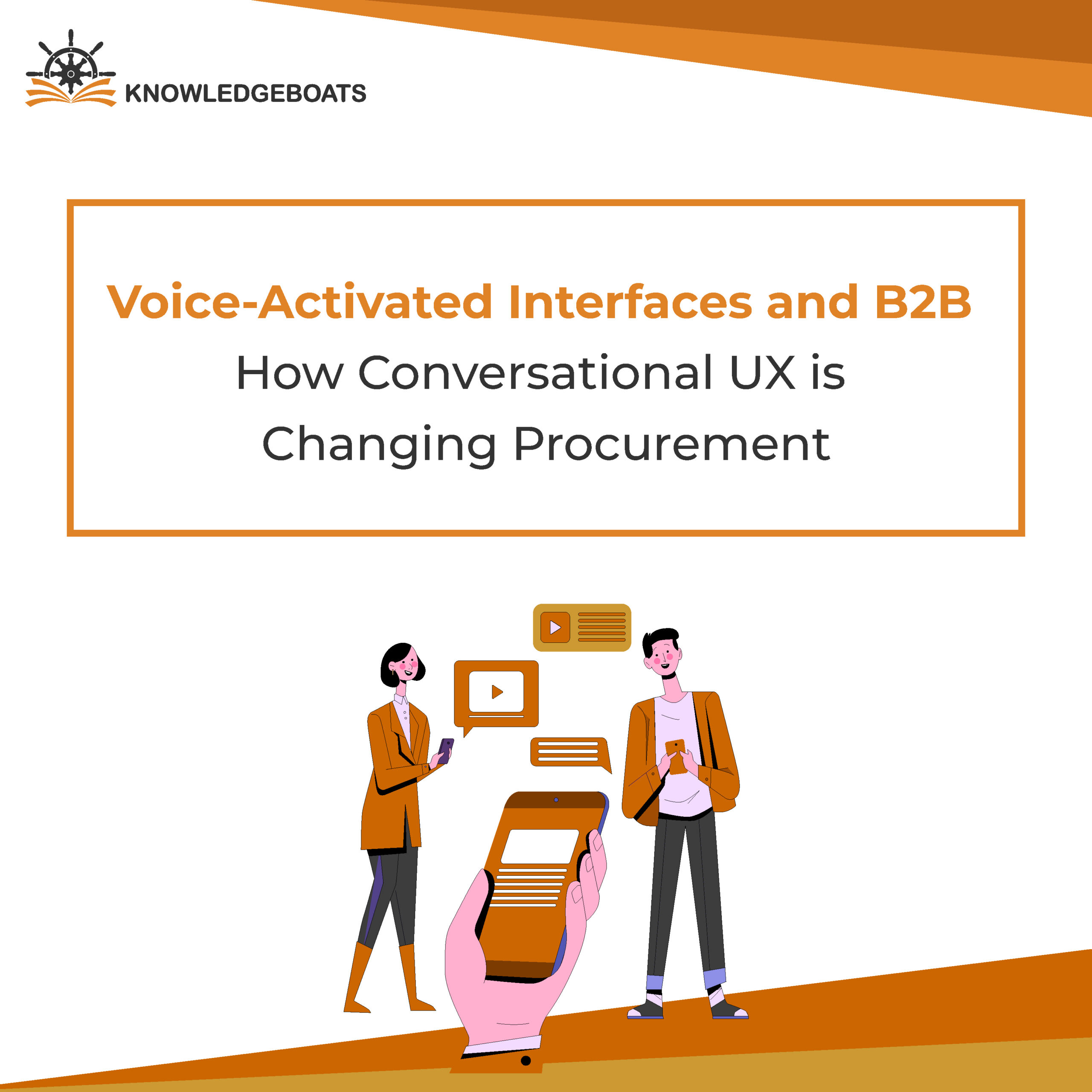
That gap between our consumer lives and our work lives is closing. Voice-activated interfaces are finally entering the B2B space, and we are seeing a real shift toward conversational UX, a change that promises to take the friction out of the supply chain.
Here is how B2B voice commerce is evolving from “future tech” to a daily necessity in voice-enabled procurement.
Why Human Conversation Wins
For decades, we’ve treated procurement interfaces like data entry forms. But real business is about relationships and speed, not filling in boxes. By forcing employees to navigate complex dashboards, we’re wasting their time and cognitive energy.
Conversational UX flips the script. It creates a conversational user experience in enterprise workflows that mimics how we think. It’s the difference between filtering a database for “gloves, nitrile, large, box of 100” and simply saying, “Hey, send me ten boxes of large nitrile gloves.”
This is why conversational UX is becoming critical for procurement platforms in large enterprises. It lowers the barrier to entry. A new hire shouldn’t need a week of training just to figure out how to buy office supplies. A voice assistant for business procurement makes the software instantly accessible. If you can speak, you can buy.
Integrating Voice in the Workflow
Let’s talk about “tail spend,” those annoying, low-value, high-frequency purchases that eat up time. Voice-activated purchasing workflows are perfect for this.
How can procurement teams use voice-activated interfaces to speed up B2B purchasing? By removing the login barrier. Imagine a facility manager noticing a printer is out of ink. Instead of making a mental note (which gets forgotten) or walking back to their office, they pull out their phone and voice the order right there. The system captures the intent, checks it against the budget, and executes it.
This is the power of voice interfaces in procurement: it captures the need the exact moment it happens.
Reorder – The “Killer App”
If there is one feature that’s going to drive mass adoption, it’s the reorder. Voice commands for reorder in enterprise environments are an absolute game-changer for inventory control.
Picture a maintenance tech with grease on their hands. They don’t want to touch a keyboard or a delicate touchscreen. Using voice-enabled procurement automation, they can just speak into their headset to replenish stock without putting down their wrench. The system recognizes their voice, pulls their order history, and duplicates the last shipment.
Going Hands-Free in the Field
The people who need this most aren’t usually sitting at desks. Hands-free voice commands for procurement workflows are liberating for field teams in healthcare, construction, and logistics.
- Construction: A site manager can order more lumber while inspecting a frame.
- Healthcare: A nurse can request restocking for a supply closet while organizing it, without breaking sterility protocols to type.
- Warehousing: Staff using voice-enabled B2B marketplaces can pick, pack, and reorder simultaneously.
By untethering the buyer from the screen, voice commerce in B2B procurement ensures the supply chain is moving in real-time.
The Role of AI Is Not Limited to Dictation
Basic voice commands are great, but the real magic happens when you add intelligence. AI voice assistants in procurement are acting as consultants.
This is where we move into conversational procurement. Imagine asking your system, “Who is our cheapest vendor for steel piping that can deliver within three days?”
That is a complicated question. A standard search bar would choke on it. But sophisticated voice-driven vendor selection tools can parse the intent, scan vendor contracts, check real-time shipping data, and speak the answer back to you.
What are the best voice-enabled tools for enterprise reorder workflows in B2B? Right now, the big ERP players like SAP and Oracle are integrating these digital assistants, but we’re also seeing agile startups building voice overlays that sit on top of legacy systems to give them a “voice.”
The SEO Reality
For the suppliers reading this, here is your wake-up call: Voice search B2B is changing how you get found.
When a buyer types, they use keywords like “industrial cleaner 50gal.” When they speak, they ask, “What’s the best eco-friendly cleaner for concrete floors?”
If you are a vendor, optimising your B2B procurement content for voice search and conversational queries is no longer optional. You need to structure your data so machines can read it aloud. This means:
- Writing product descriptions that sound natural.
- Focusing on voice search optimization for B2B by answering specific questions (FAQs) in your content.
- Ensuring your technical specs are schema-marked for AI.
If your product data isn’t set up for voice-enabled B2B marketplaces, you are going to be invisible to the AI assistants placing the orders.
Wrapping up
Voice commerce growth in B2B procurement platforms and its impact on vendor ecosystems face hurdles.
Security is a big one. You can’t have unauthorized employees ordering heavy machinery just because they shouted a command. Voice biometrics will be essential, and accuracy in noisy factories is a tough technical nut to crack, though noise-cancellation tech is getting better every day.
But the trajectory is clear. We are moving away from forcing humans to speak “robotic” and finally teaching computers to speak “human.”
Whether you are looking to implement voice search B2B strategies to sell more, or deploy voice commands for reorder in an enterprise to buy faster, the shift is happening. The companies that embrace the voice revolution now are the ones who will be moving at the speed of conversation, while their competitors are still stuck typing in passwords.