In B2B demand generation, speed is now the baseline requirement. For Lead Generation Managers and Revenue Operations leaders, the biggest bottleneck usually is not a lack of strategy. We know what needs to happen. The problem is the rigid technology stack supporting us.
We define a process, lock it into code, and six months later, when the market shifts or a new channel emerges, we are left trying to force-fit new strategies into old, brittle pipelines.
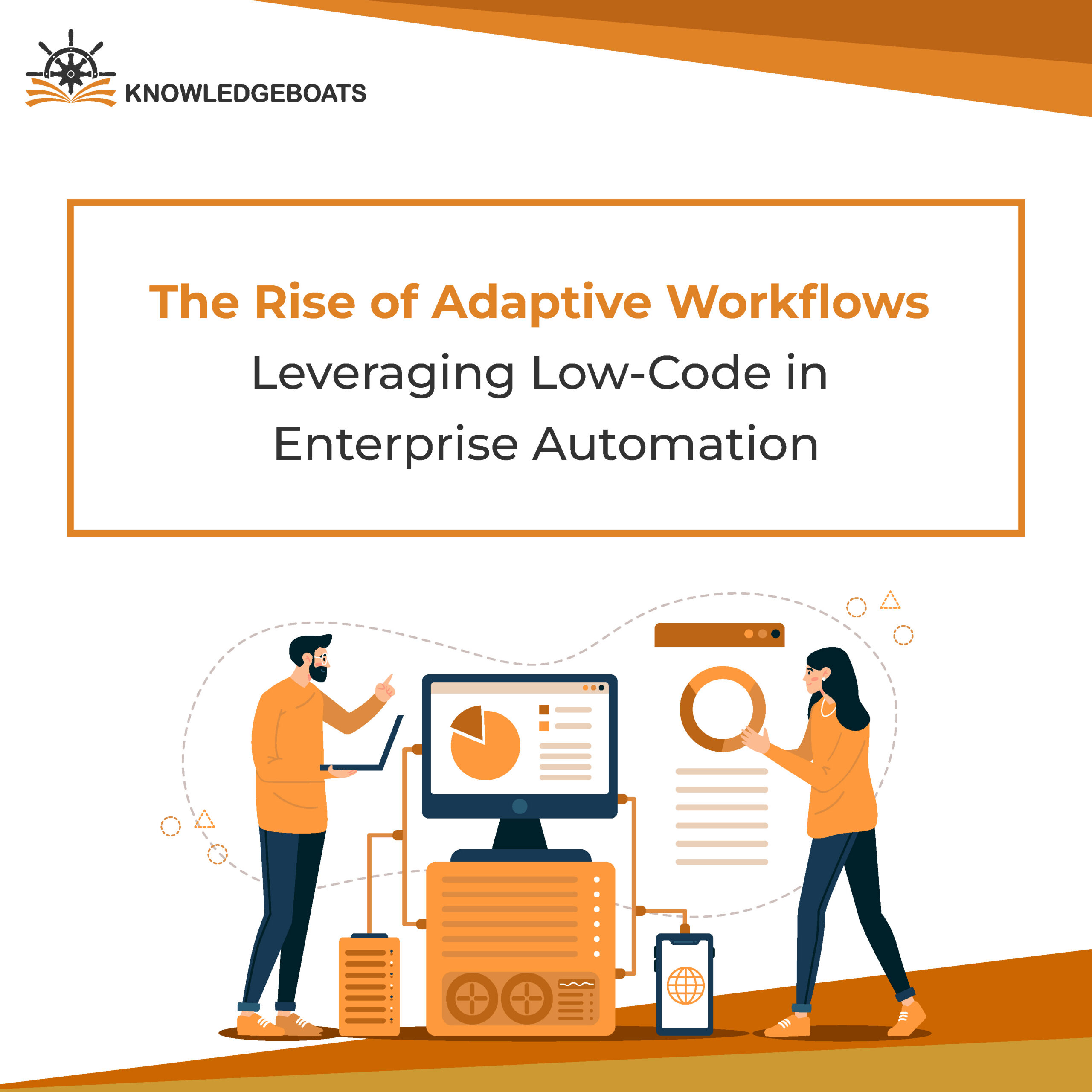
That rigidity is exactly what is driving the shift toward adaptive workflows. Unlike the linear, static automation of the last decade, adaptive workflows are designed to be dynamic. They evolve based on data inputs and exceptions without requiring a massive platform overhaul. The engine making this agility possible is low-code.
Enterprise automation is finally moving away from static scripting toward a model that prioritizes resilience. Here is how modern enterprises are using low-code platforms to build workflows that do not just run but adapt to the business.
The Shift from Static Scripts to Adaptive Workflows
For years, workflow automation was strictly an IT territory. You scoped a project, submitted a ticket, waited for a development cycle, and eventually received a hard-coded solution. If your lead scoring parameters changed or a new data privacy regulation dropped, you were back in the queue.
Adaptive workflows flip this model on its head. They are designed to handle variability. Instead of a single, unchangeable path from A to B, an adaptive workflow assesses context at every step. It asks questions like: Is this a high-priority account? Did the API integration fail? Does this specific exception require human intervention, or can AI handle it?
This is where digital transformation automation creates tangible value. It is not just about digitizing paper processes. It creates agile workflow automation that responds to real-time operational needs. For a demand gen team, this means lead routing that adjusts instantly based on sales capacity or territory performance rather than waiting for a quarterly CRM update.
How Low-Code Platforms Enable Adaptive Workflows
The reason we are seeing this surge now is the maturity of low-code enterprise platforms. These tools have fundamentally changed application delivery with low code by allowing business technologists, who often sit directly within marketing or ops teams, to modify processes visually.
Low-code automation for business processes reduces the heavy reliance on custom coding. By using visual interfaces, logic blocks, and pre-built connectors, teams can iterate on workflows in hours rather than weeks. This capability is critical for digital operations optimisation. When a marketing manager identifies a drop-off in the funnel, they need the ability to tweak the nurture sequence or the data hand-off immediately, not during the next sprint.
We are seeing exactly how low-code platforms enable adaptive workflows in enterprise automation through modularity. Because components are reusable, you are not building from scratch every time. You are orchestrating pre-validated blocks of logic, which ensures that speed does not come at the cost of system stability.
The Convergence of Low-Code, RPA, and AI
One of the most powerful trends in the market is the strategic integration of low-code and RPA (Robotic Process Automation).
RPA has historically been excellent at mimicking human keystrokes for repetitive tasks, such as scraping data from a legacy ERP. However, RPA can be brittle because the bot breaks if a user interface changes. Low-code provides the orchestration layer that RPA often lacks.
By integrating low-code and RPA for scalable business process automation, organizations create a hybrid model. The RPA bots handle the granular, repetitive tasks, while the low-code platform manages the broader logic, user interfaces, and data flow. This is workflow orchestration in an enterprise at its finest. It creates a cohesive ecosystem where legacy systems and modern apps talk to each other seamlessly.
Add AI-powered workflow automation to this mix, and the potential scales significantly. We are moving beyond simple “if/then” rules. Modern low-code platforms are embedding machine learning models that can predict process bottlenecks or recommend the “next best action” for a lead. The workflow becomes intelligent as it routes complex B2B queries to specialized reps while automating standard inquiries without manual sorting.
The Citizen Developer: Scaling Without Chaos
For the C-suite, the phrase “citizen developer” can sometimes sound like a risk factor. However, leveraging citizen development for workflow automation with low-code is often the only way to scale automation at the pace of market demand. IT simply cannot build everything the business needs in real-time.
Successful low-code/no-code enterprise adoption relies on a governed sandbox. IT sets the guardrails, including security protocols, data access limits, and compliance checks, while the subject matter experts build the solutions that solve their specific problems.
This creates a culture of adaptive business workflows. The people closest to the problem are empowered to build the solution. If a lead generation manager notices that a specific webinar source requires a different follow-up cadence, they can adjust the workflow logic themselves. This agility is what separates market leaders from laggards.
Challenges and Strategic Best Practices
Despite the clear ROI, the path is not devoid of hurdles. Low-code adoption challenges and best practices in enterprise automation usually center on governance and sprawl.
Without a strategy, you risk creating fragmented silos of automation, often called “shadow IT,” where critical business logic lives in an undocumented app built by an employee who just left the company.
To mitigate this, successful enterprises adopt a “Center of Excellence” (CoE) model for workflow orchestration in the enterprise:
- Centralized Governance: IT maintains control over the platform and security but delegates development rights.
- Focus on Reusability: Build components that can be used across departments to avoid reinventing the wheel.
- Prioritize Process over Tooling: Do not just automate a bad process. Optimize the workflow first, and then apply low-code to accelerate it.
- Invest in Training: Ensure your “citizen developers” understand data hygiene and logic structure.
Wrapping up: Future-Proofing Operations
The shift toward adaptive workflows is a correction. The rigid, monolithic ERPs and CRMs of the past cannot keep up with the fluidity of modern B2B commerce.
By leveraging low-code and integrating it with RPA and AI, enterprises are building a nervous system that reacts, learns, and pivots. For Lead Generation Managers and operational leaders, this means spending less time fighting with tools and more time analyzing the data those tools produce.
The future of enterprise automation is flexible, democratized, and intelligent. It is time to stop building workflows for how the business works today and start building platforms that can adapt to how the business will work tomorrow.