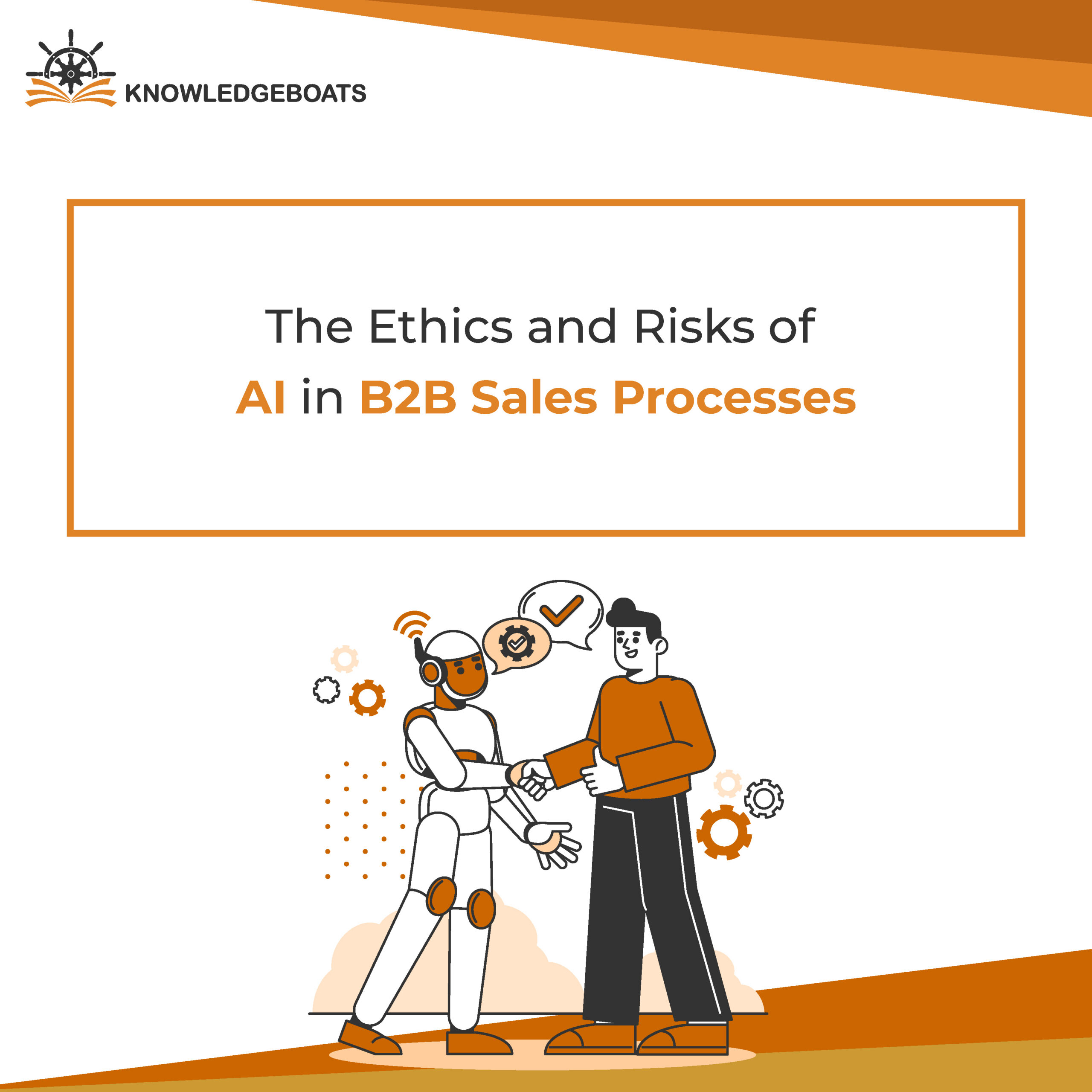
AI has completely changed the game in B2B sales. It is practically every high-achieving sales team’s engine. The efficiency is astounding, from identifying which leads will close to creating customised outreach in a matter of seconds.
However, a new and somewhat unsettling dialogue begins as we rely more on these algorithms. We’re shifting our focus from “What can this tool do for my quota?” to “Is this actually the right way to treat our customers?” Building a trustworthy brand now requires navigating AI ethics in B2B sales.
We must begin to view AI as a potent, if frequently imperfect, partner if we hope to prevent the greatest risks associated with AI in B2B sales processes.
Why Ethics Matter More Than Ever
In the B2B world, we sell long-term partnerships. These relationships are built on a foundation of trust that takes months to build and seconds to break. When you introduce a black box algorithm into that mix, that trust gets fragile.
One of the biggest B2B sales AI challenges and risks is the loss of the human touch. If a prospect feels like they’re being poked and prodded by an invisible machine rather than being helped by a consultant, they’re going to walk. Building customer trust and AI usage in sales means being upfront about how you’re using tech. You don’t want your prospects to feel like they’re just data points in a machine.
AI Bias in Automation
If your AI looks at the last ten years of your successful deals to find new leads, it’s going to prioritize the types of companies you’ve already sold to. If those historical deals were mostly with a specific demographic or industry, the AI will keep doubling down on that same narrow path.
The impact of algorithmic bias on B2B sales outcomes is that you end up ignoring huge chunks of the market without even realizing it. To fix this, leadership needs to learn how to audit sales AI for fairness and bias. We must intentionally look for the ghosts in the machine and ensure our algorithmic bias in sales AI tools isn’t quietly killing our diversity and our revenue.
Data Privacy vs. The Creep Factor
We’ve all experienced when you mention a product in a private conversation, and suddenly it’s in your LinkedIn feed. In sales, data privacy and AI in sales can get real creepy, real fast.
AI thrives on data – the more, the better. But just because you can scrape a prospect’s entire digital life to find a hook for a cold call doesn’t mean you should. We must prioritize data protection in AI sales systems to stay on the right side of the law and common decency.
The ethical challenges of using AI for lead qualification usually boil down to one question: Are we being helpful or are we being intrusive? Responsible AI in B2B sales means setting boundaries. It means respecting that a prospect’s data is a piece of their identity.
Why We Need Transparency
The loss of the human touch is one of the biggest risks and challenges associated with B2B sales AI. A prospect will walk if they believe they are being prodded and prodded by an unseen machine instead of receiving assistance from a consultant. Being transparent about your use of technology is essential to gaining the trust of your customers and utilising AI in sales. Prospects shouldn’t feel like data points in a machine.
Why transparency matters in AI sales decision-making is about accountability. If a sales rep can’t explain the logic behind a price or a strategy, they lose their authority. Ensuring AI transparency and explainability in sales is the only way to make sure the AI is serving the business goals, not just making random guesses based on obscure patterns.
Also, don’t be afraid to pull back the curtain for your clients. There are many ways to communicate AI use transparently to prospects like a simple disclaimer that a chatbot is an AI, or a note about how you use data to personalize their experience. People appreciate the honesty.
Finding the Right Balance
AI can crunch numbers, but it can’t read the room. It doesn’t understand the subtle shift in a client’s tone during a high-stakes negotiation or the cultural nuances of a global deal. That’s why balancing AI and human interaction in sales is the secret sauce of the modern era.
Human oversight in AI sales processes is the safety net. We need to be balancing AI-generated insights with human judgment. The AI gives you the map, but the human does the driving. When it comes to the ethical implications of AI-driven pricing strategies, a human needs to be there to make sure the algorithm isn’t being predatory or unfair.
Building a Roadmap for Responsible AI
So, how do we do this? You can’t just hope for the best. You need AI sales governance and compliance.
Here are a few best practices for ethical AI governance in sales teams:
- Set the Rules: Don’t wait for a crisis. Define your ethical guidelines for AI in B2B sales today. What data is off-limits? How much automation is too much?
- Create a Framework: Put a formal AI governance framework for sales teams in place. This means having a team consisting of IT, sales and legal, that vets every new tool.
- Proactive Mitigation: Develop AI risk mitigation strategies. Regularly test your tools to see if they’re drifting toward bias or making weird decisions.
- Focus on the Workflow: Learn how to build trust with AI-assisted sales workflows. Train your reps to use AI as a collaborator.
Wrapping Up
At the end of the day, how to ensure ethical AI in B2B sales processes is about making them better.
The companies that win in the next decade won’t be the ones with the most powerful AI. They’ll be the ones that used AI to become more human. By focusing on responsible AI in B2B sales, you’re building a business that people want to buy from. In a world full of bots, being ethical is your biggest competitive advantage.