Every Monday morning, marketing leaders across the globe stare at the dashboard. It’s full of green arrows, click-through rates, and cost-per-acquisition figures. It’s a dopamine hit. We love short-term ROI because it’s fast, it’s measurable, and it keeps the board of directors off our backs.
But here is the uncomfortable truth we don’t talk about enough in our quarterly reviews: If you’re only optimizing for today’s sale, you might be accidentally dismantling your future.
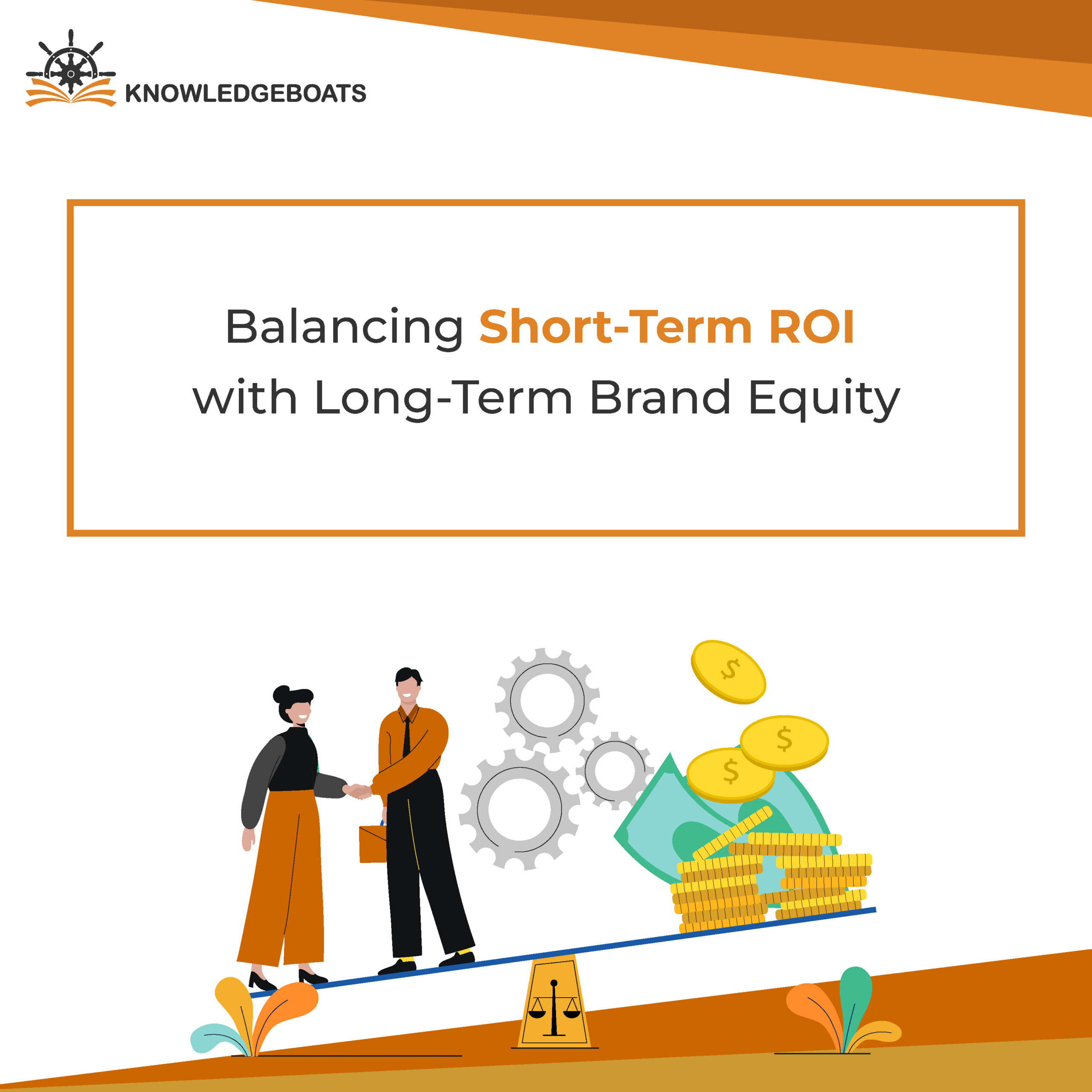
The tension of ROI vs brand equity is a fight for the soul of your company. If you lean too hard into performance, you become a commodity. If you lean too hard into vibes and storytelling, you go broke.
So, how do we find that sweet spot? Let’s get into the weeds of balancing marketing ROI and brand building without losing our minds or our budgets.
The Performance Trap
Performance marketing ROI metrics are addictive. You spend $10,000 on Meta or Google, and you can see exactly how many people bought a pair of shoes by Tuesday. It feels like a vending machine.
But relying solely on this is what I call the performance trap. When you focus exclusively on short-term vs long-term marketing strategy, you are just harvesting existing demand. You’re competing for the people who were already looking for a product like yours.
The problem? Eventually, the well runs dry. Without long-term brand equity, your customer acquisition costs (CAC) will inevitably skyrocket. Why? Because if people don’t know who you are before they see your ad, you have to pay a stranger tax to convince them to click.
Why Long-Term Brand Equity Matters
If performance marketing is picking the fruit, a brand building strategy is planting the orchard. You can’t have one without the other, but they require totally different mindsets.
Long-term ROI marketing is about playing the mental availability game. It’s about being the first name a person thinks of when they realize they have a problem. The ROI benefits of sustained brand building aren’t always visible in next week’s report, but they show up in your long-term margins.
Why does someone pay $5 for a Starbucks coffee when the gas station next door sells it for $1.50? That’s not a performance marketing win. That is the power of brand equity over immediate sales.
The 60/40 Rule
If you’re wondering how to balance short-term ROI with long-term brand equity, start with the “Binet & Field” 60/40 rule. After studying decades of data, they found that the most effective marketing mix usually sits at 60% brand building and 40% sales activation.
Of course, this isn’t a holy commandment. If you’re a scrappy startup, you might need to flip that ratio to survive. But as you scale, your marketing investment balance must shift. If you stay at 90% performance for too long, your brand will become invisible, and your growth will plateau.
How Do You Measure Brand Equity?
The biggest reason brand building gets cut during budget season is that it’s hard to put in a spreadsheet. But brand equity measurement has come a long way.
To understand why brand equity matters alongside ROI, you need to look at different metrics:
- Share of Voice (SOV) vs. Share of Market (SOM): If you’re shouting louder than your market share suggests, you’re likely to grow. If your SOV is lower than your market share, you’re shrinking.
- Branded Search Volume: This is my favorite human metric. Are people typing your company name into Google? If they are, your brand is doing the heavy lifting for you.
- Marketing Mix Modeling (MMM): Marketing mix modeling and ROI tools help you see how that expensive video campaign you ran in March actually fueled sales in July.
Strategies for Both ROI and Brand Equity
You don’t have to pick a side. Some of the best practices for short-term ROI and brand growth involve blending the two into a brand-led growth strategy.
- Creative is your multiplier: A boring ad with a great “Buy Now” button is a waste of money. A great brand story with a “Buy Now” button is a powerhouse. Trade-offs between performance marketing and branding vanish when the creative itself is memorable.
- Think about Customer Lifetime Value (CLV): We need to stop obsessed with the first transaction. Customer lifetime value and brand equity are two sides of the same coin. A brand-loyal customer become a recurring revenue stream that doesn’t require another ad click to convert.
- Sustainable Growth Marketing: This means avoiding discount addiction. If you only get sales when you offer a 20% off coupon, you’re training your customers to wait for a sale.
Real-World Reality Checks
When we look at examples of balancing immediate sales and brand building, Airbnb is the gold standard. A few years ago, they famously slashed their performance spend and doubled down on brand. Everyone thought they were crazy. Instead, they had some of their most profitable years ever because their brand was strong enough to pull people in directly.
On the flip side, look at many D2C brands that thrived on cheap Facebook ads in 2015. When the ad costs went up, they crumbled because they never invested in long-term brand equity. They were just arbitrage machines, not brands.
Wrapping Up
Allocating marketing budget for short-term vs long-term goals is never easy. There will always be a sales manager or a CFO asking why we’re spending money on a brand film when we could just buy more keywords.
Performance marketing ROI metrics tell you how you did yesterday. Brand equity tells you how you’ll do next year.
A truly sustainable marketing ROI requires the courage to spend money on things that don’t always click. It’s about building a reputation that precedes you, so that when the customer is finally ready to buy, the choice is already made.
Don’t let your 7-day attribution window blind you to your 7-year growth potential.