For a long time, the CFO’s job was mostly about looking backward. You spent weeks closing the books, only to present a report that was essentially a snapshot of the past. But in today’s economy where a single headline can shift interest rates or snap a global supply chain, looking at last month’s data is like trying to drive a car by only looking in the rearview mirror. You might see where you’ve been, but you’re going to miss the turn right in front of you.
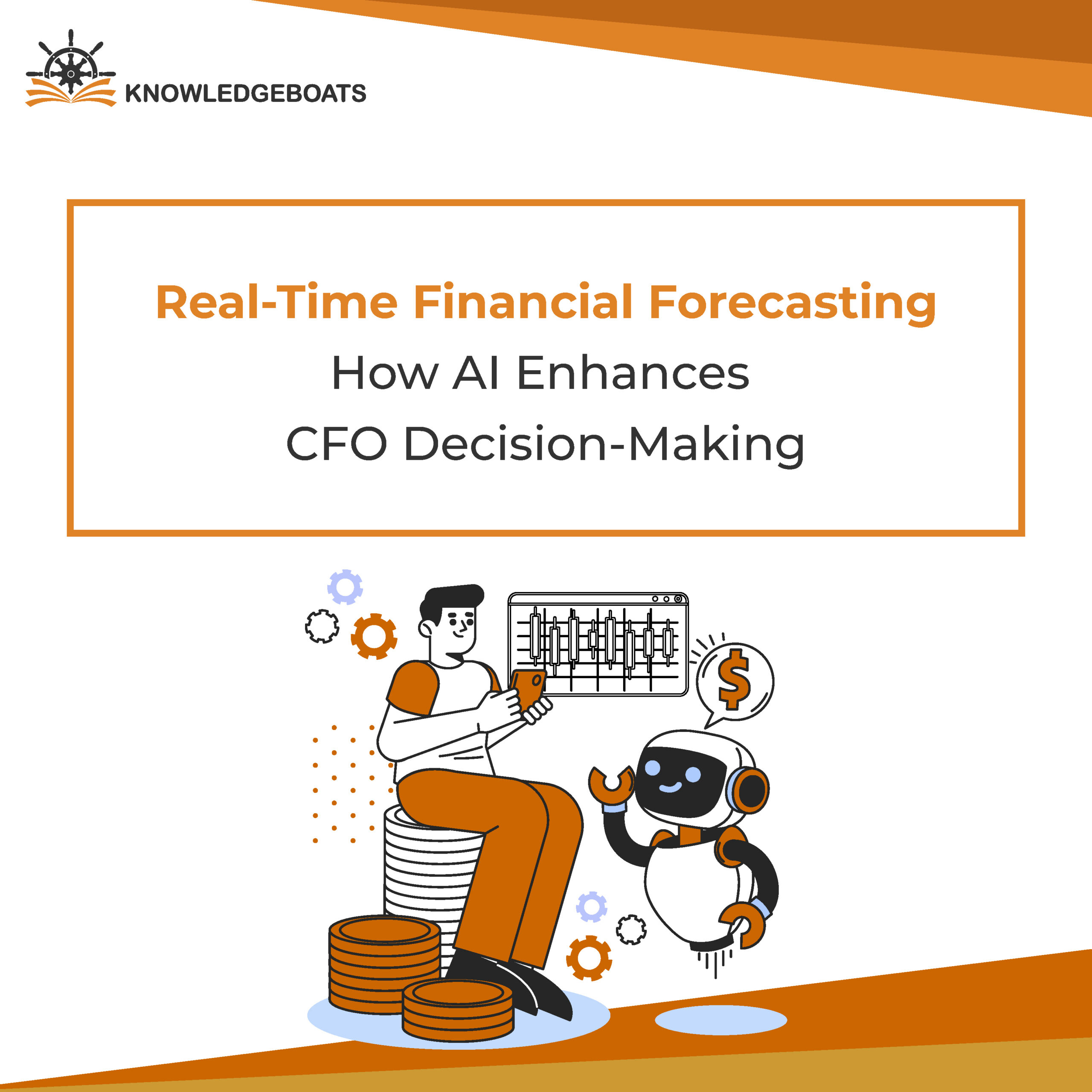
This is why we’re seeing a massive shift toward real-time financial forecasting which is becoming the standard for any finance leader who wants a seat at the strategic table. By leveraging AI in financial forecasting, CFOs are moving away from static spreadsheets and toward a more agile, living version of their data.
The Death of the Static Spreadsheet
We’ve all been there with a massive Excel file with forty tabs, three of which are broken, and a data set that was already out of date by the time the VP of Sales emailed it over. Traditional FP&A is slow, prone to human error, and frankly, exhausting.
Finance transformation via AI forecasting is the solution to that burnout. Instead of your team spending 80% of their month just cleaning and consolidating data, finance forecasting automation handles the heavy lifting. This allows the team to focus on what matters the interpretation and strategy. When you move to AI-powered forecasting for finance, the system connects directly to your ERP, CRM, and even external market data. The result? A live forecast that updates as business happens.
How AI Turns Data into Decisions
So, how does this change day-to-day for a finance team? It comes down to CFO decision making with AI. When you have a machine learning engine running in the background, you’re not just seeing what happened, you’re seeing what’s likely to happen.
1. Better Accuracy
Traditional models usually rely on linear growth assumptions. But business isn’t linear. Machine learning financial forecasting models are built to spot non-linear patterns. They can look at five years of historical data, cross-reference it with current inflation rates, and tell you that your Q3 margins are at risk before the quarter even starts. This forecasting accuracy improvement with AI means fewer please explain this variance conversations with the board.
2. Managing the Cash Flow Rollercoaster
Cash is the lifeblood of the company yet forecasting it is notoriously difficult. AI for cash flow forecasting goes deeper than just looking at accounts receivable. It analyzes the actual payment behavior of your customers. If a Tier-1 client consistently pays 12 days late in December, the AI adjusts for that. How CFOs can leverage predictive analytics and real-time forecasting to optimize cash flow is by knowing exactly when the dry spells are coming, allowing for better-timed investments or credit maneuvers.
3. Spotting the Red Flags
One of the most underrated features of these systems is anomaly detection in forecasting. If a department’s miscellaneous travel suddenly spikes outside of historical norms, the AI flags it in real-time. You don’t have to wait for the end-of-quarter audit to realize there’s a leak in the bucket.
Playing “What-If” Without the Headache
If the last few years have taught us anything, it’s that Plan A rarely survives contact with reality. Scenario planning and what-if simulations with AI for finance leaders in 2026 will be the difference between companies that thrive and those that just survive.
With predictive financial forecasting, you can run thousands of simulations in seconds. What if our shipping costs jump 15%? What if the Euro weakens? What if we delay the new product launch by two months?
By forecasting risk and uncertainty with AI, you’re not just guessing. You’re looking at a probability cloud that helps you make defensive decisions before the crisis actually hits. This is the heart of finance decision intelligence with AI, being proactive rather than reactive.
Making the Transition
If you’re thinking about integrating external data into real-time financial forecasting using AI, you’ve probably realized it’s not as simple as flipping a switch. How finance teams transition from spreadsheets to AI-driven real-time forecasting platforms is a journey that requires a culture shift.
Here are a few best practices for implementing AI-powered real-time forecasting in finance teams:
- Clean up your data debt first: AI is a powerful engine, but it won’t run on dirty fuel. Make sure your ERP data is consistent across regions.
- Focus on the Why: Don’t just show the board a number. Use real-time data-driven forecasting to explain the drivers behind that number.
- Start small: You don’t need to automate the entire P&L on day one. Start with a specific pain point, like inventory forecasting or OpEx tracking.
Navigating the Challenges
We must acknowledge the elephant in the room: AI can be a black box. It’s hard to trust a number when you don’t see the formula behind it. This is one of the biggest challenges and solutions for finance teams adopting real-time AI forecasting models.
The solution is Explainable AI. You need systems that don’t just give you a prediction but show you which variables like labor costs or raw material prices pushed the needle. This builds the trust necessary for real-time forecasting for CFOs: how to turn data into decisions with AI.
Wrapping Up
The goal of AI-enabled budgeting and forecasting isn’t to replace the human intuition of a seasoned CFO. It’s to augment it. It’s about stripping away the manual, repetitive tasks that clog up the finance department and replacing them with dynamic forecasting models in finance that provide clarity.
As we look toward the future, the ability to pivot based on real-time forecasting for CFOs will be the ultimate competitive advantage. You’ll be able to move faster, invest more confidently, and perhaps most importantly, sleep better at night knowing that you aren’t driving by looking in the rearview mirror.
The tools are here. The data is there. The only question is how quickly your team can turn that data into a strategic roadmap.